Aside: Medicine in Croatia

One of the challenges that we knew we’d have with our extended travel was doctors and prescriptions. Something that I had only googled, and by all accounts would be easy. So what I’m about to tell you just might blow your mind.

I take two pills every day, and I was starting to get low, so I decided to look into booking an appointment with a local physician to get the prescriptions written up. There are several websites and apps available and after settling one one I started the process. After entering a few details like name, age, location, purpose for the appointment and requested time, I received a confirmation via WhatsApp, letting me know that they notified their network. In about 30 minutes I had a video consultation booked for later that day, in about 3 hours. All I had to do was pay a fee of €60.

Just before my appointment I received a reminder that my appointment was in 2 minutes. It was my responsibility to call the doctor, not the other way around. Using the links provided I was put in a virtual waiting room and in a few minutes had a video conversation with an English speaking Croatian doctor. He issued my prescriptions and forwarded them to a pharmacy near me. He told me to wait until I received the prescriptions in my inbox before going to the pharmacy. The email came minutes later. I went into the pharmacy, and told them that a local doctor emailed a couple of prescriptions for me, and they brought them up quickly. However they needed some clarification from the doctor, whom they phoned right then, spoke to, and then we’re able to fill the prescription. After paying a little over €15 for two months worth of two different prescriptions, I was done. 

I feel like something like this would be impossible at home. The ease of the process, the quick access to the doctor, and the inexpensive price of the name brand drugs was shocking to us. While I’m grateful for the Canadian medical system, my experience here shows we have a lot of room for improvement.

For those who wish to know, the service I used was doctorsa.com, good for booking appointments across Europe.
Slovenia

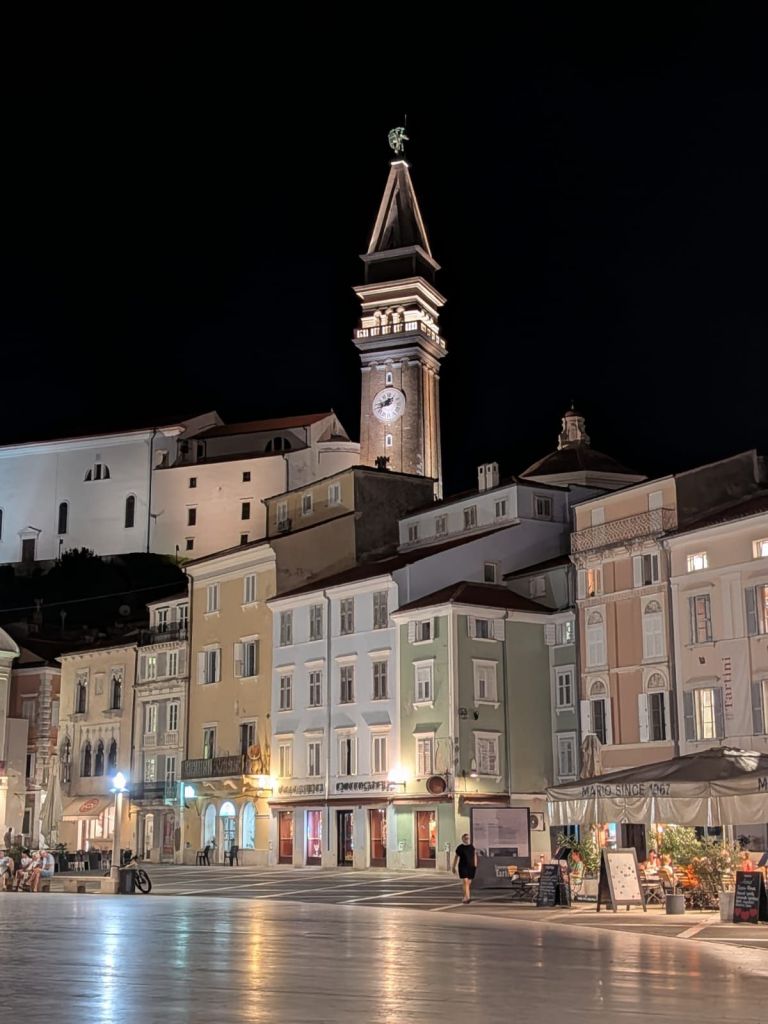
We arrived in Piran at around 8:00pm, dropped our stuff at our apartment and went to find a restaurant that Carmen had heard of , but the lineup was way too long so we headed for the main square to find a place to eat. The square was busy with pedestrians, rollerbladers, dogs, and a free concert.  We sat for a while after our meal, and watched and listened.

The next morning we wandered the town and found a small vegetable market where we bought some plums and strawberries, and then a grocery store where we bought some yogurt. We took that back to our place and ate breakfast.

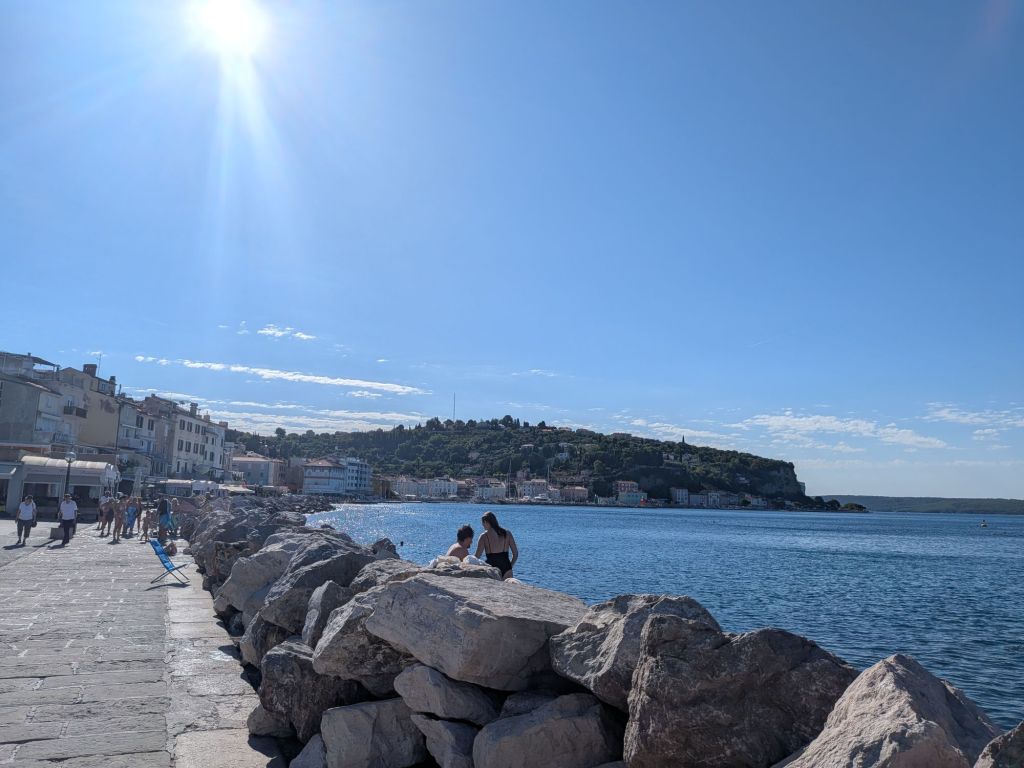
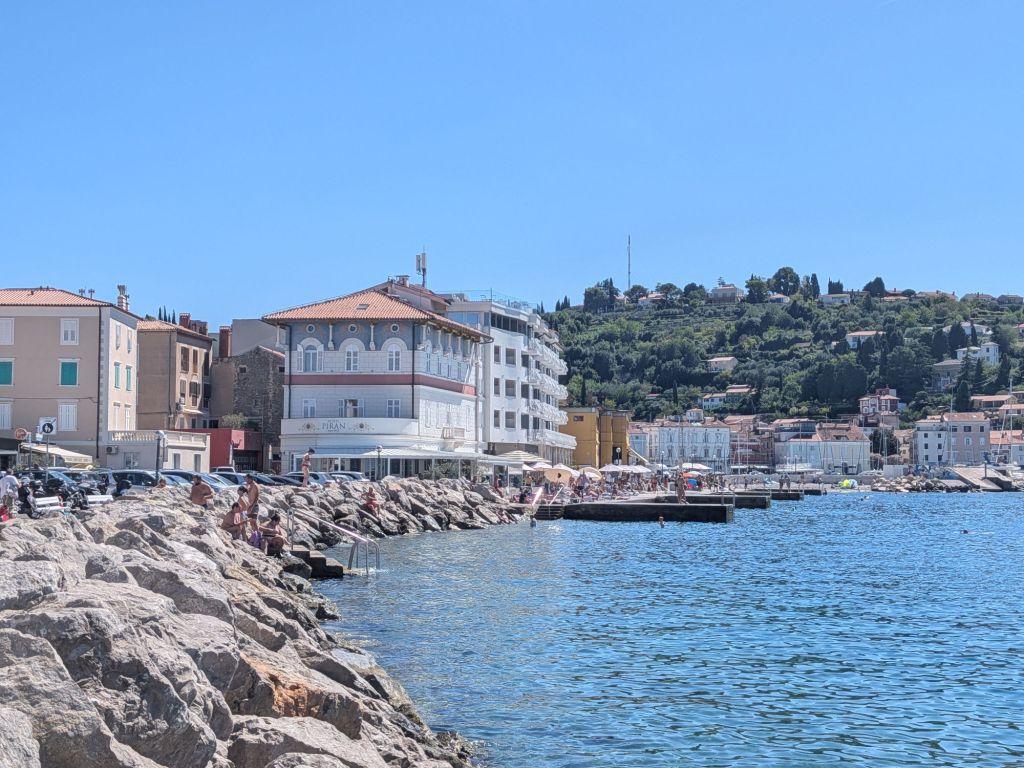
After breakfast we lathered up with sunscreen and went for a swim in the Adriatic.

The water was so clear, and there were lots of swimmers everywhere along the seawall.

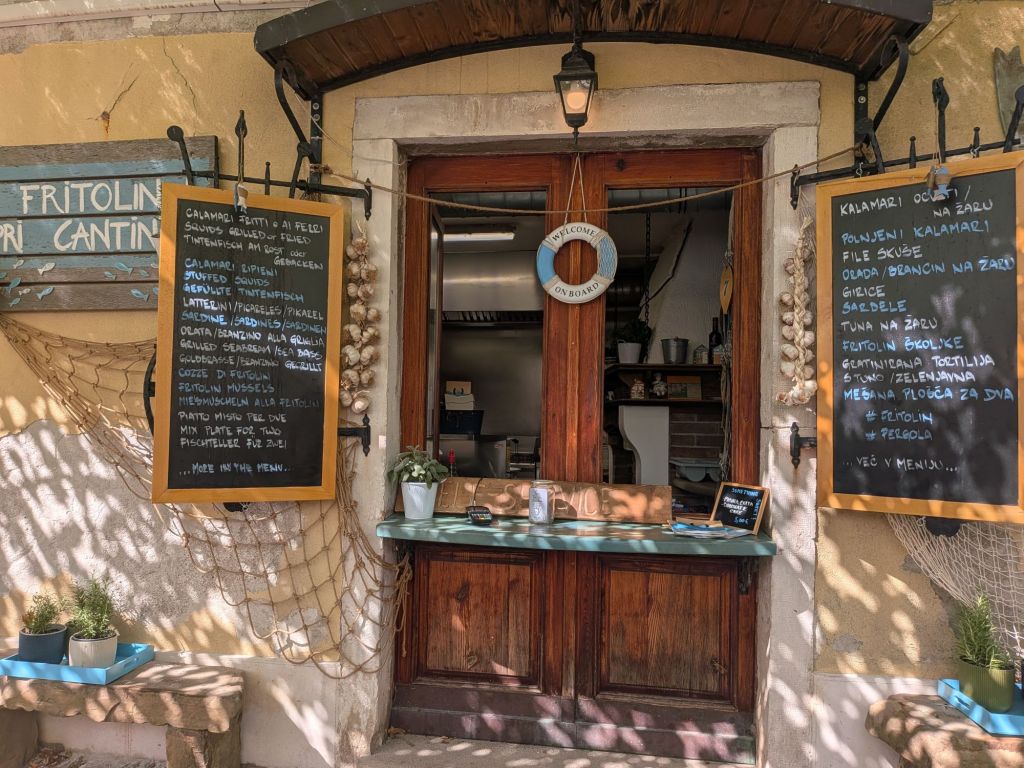
After the swim we decided to try the busy restaurant from the previous night for lunch, hoping to beat any crowds. And we did. We got there just as they opened, there were only a few people in front of us.

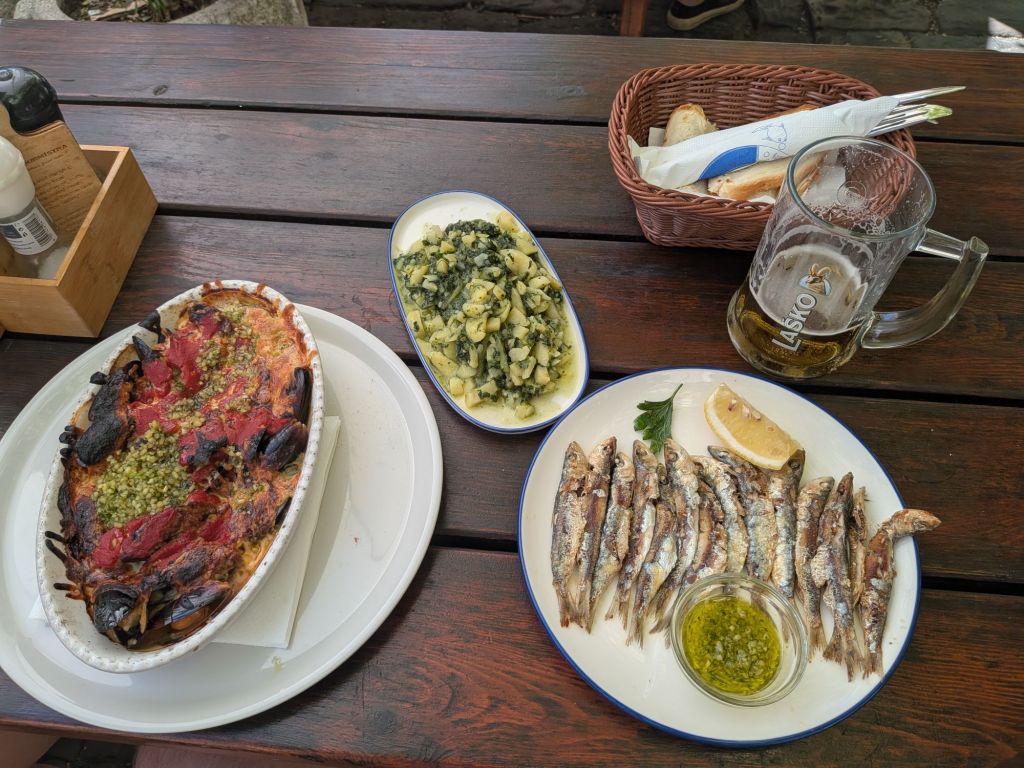
Baked mussels in tomatoes and cheese, fried anchovies with chopped garlic, and some much needed roughage, chard and potatoes. So good.

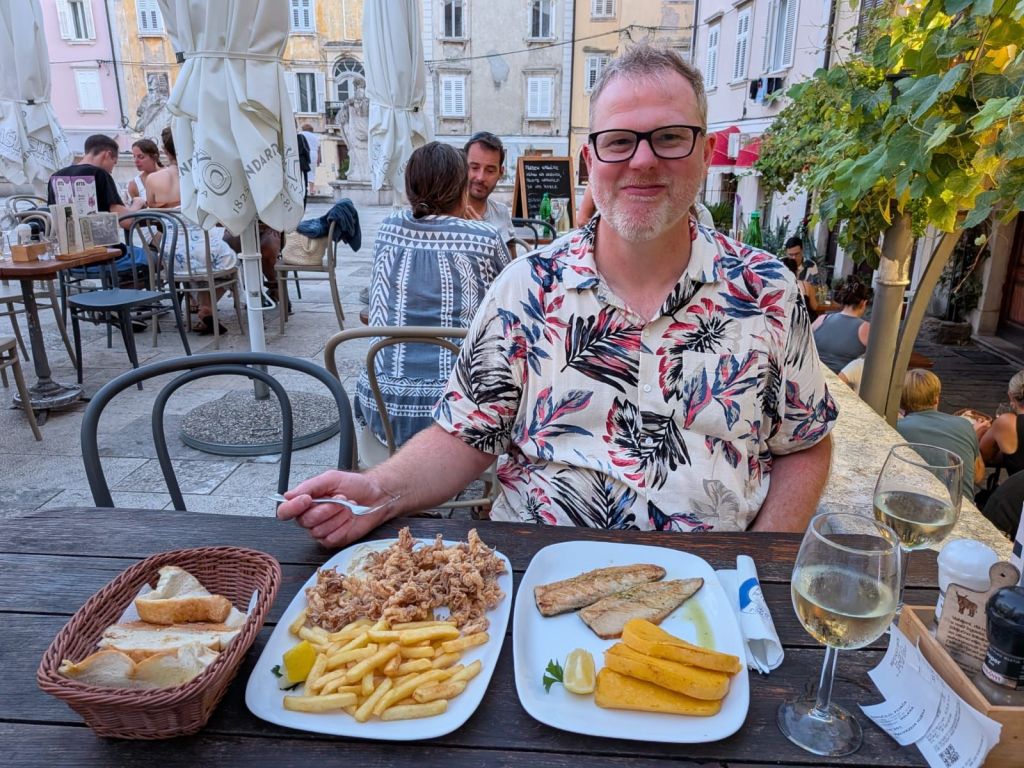
Piran is a tiny seaside town with no shortage of places to eat and drink, so that’s what we did. That and nap. For dinner we went to the same restaurant that we went to for lunch. Yes, it was that good.

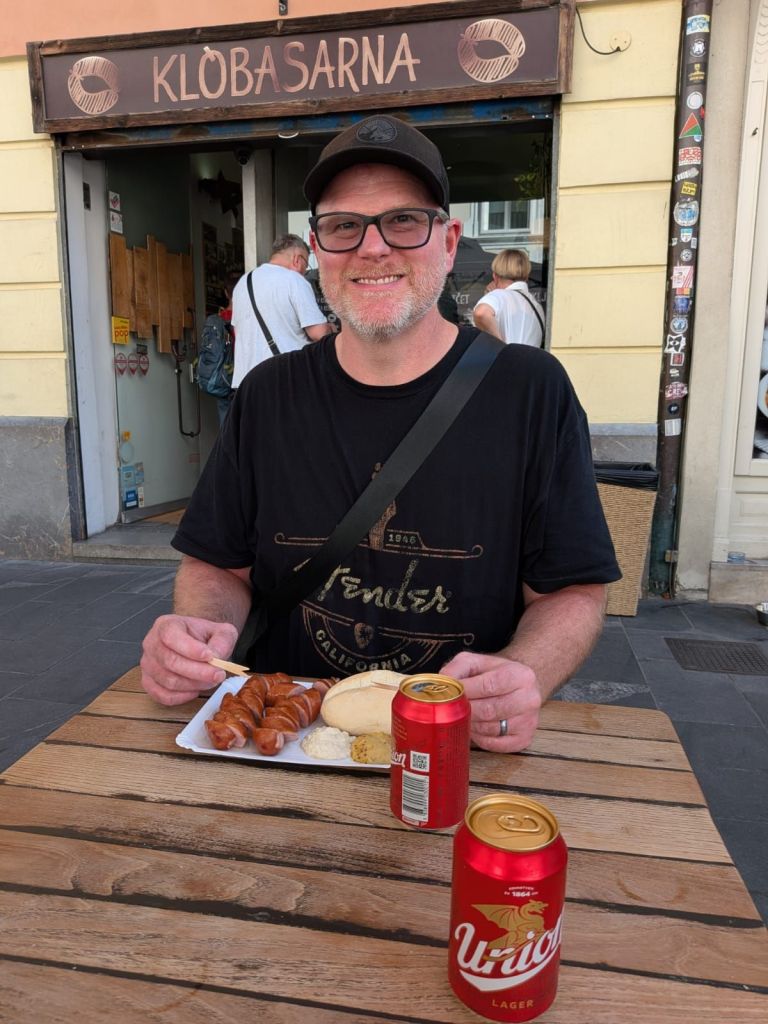
The next day we headed off to Ljubljana which turned out to be an absolutely delightful city. The capital of Slovenia, bursting with cafes, restaurants and bars. We were able to get into our apartment a bit early, and just like every time we reached a new destination, we were dying for something to eat. First stop, Klobasarna. A small vendor that specializes in Carniolian sausage.

But food isn’t the only thing Slovenia is good for, it has a long and tumultuous history spanning over a thousand years, where foreign oppression was a common theme. It really wasn’t until the early 90s that Slovenia became truly independent, after they announced they would separate from Yugoslavia. Of course that did come without a fight, albeit a small one compared to the rest of the countries that made up the former communist state. Since then, Slovenia seems to have thrived, Ljubljana putting that on full display.

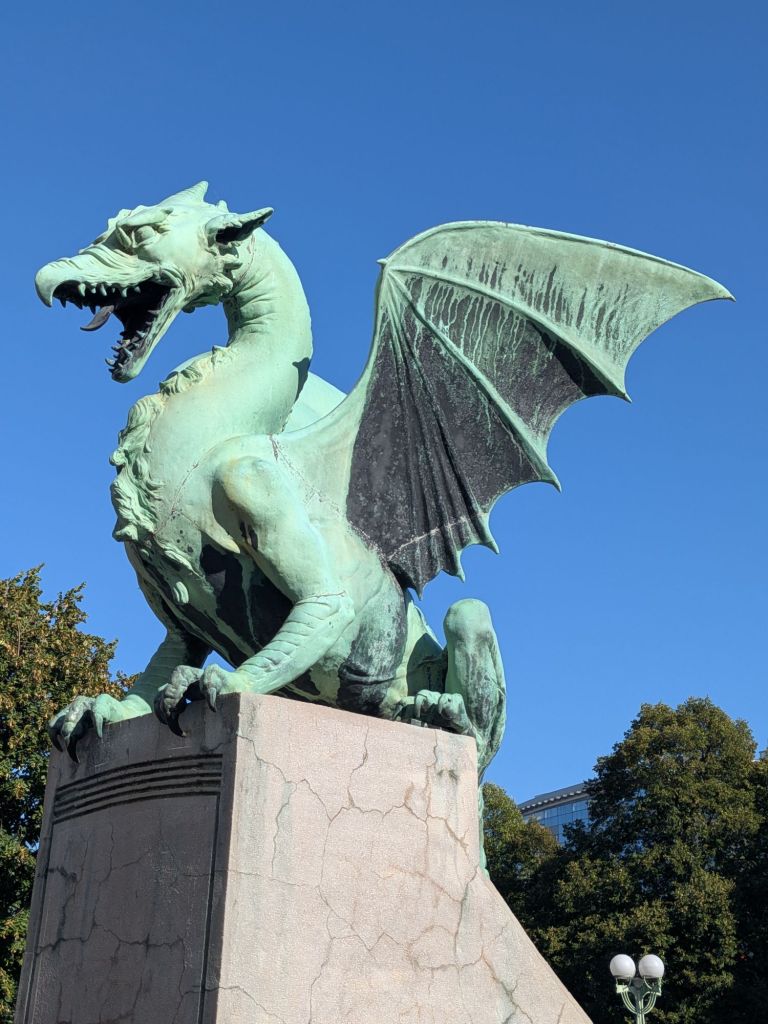
Ljubljana’s famous dragon mascot on the Dragon Bridge. Built in 1900, was one of the first reinforced concrete structures built in Europe.
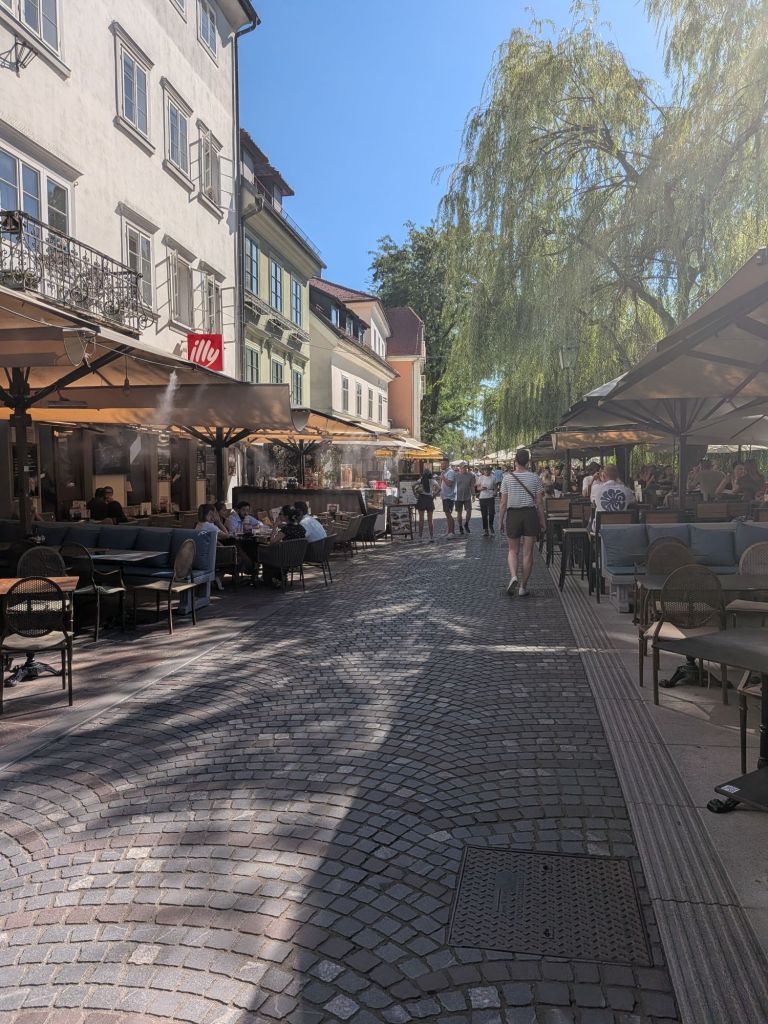
The cafe-lined, cobblestone streets of Ljubljana.

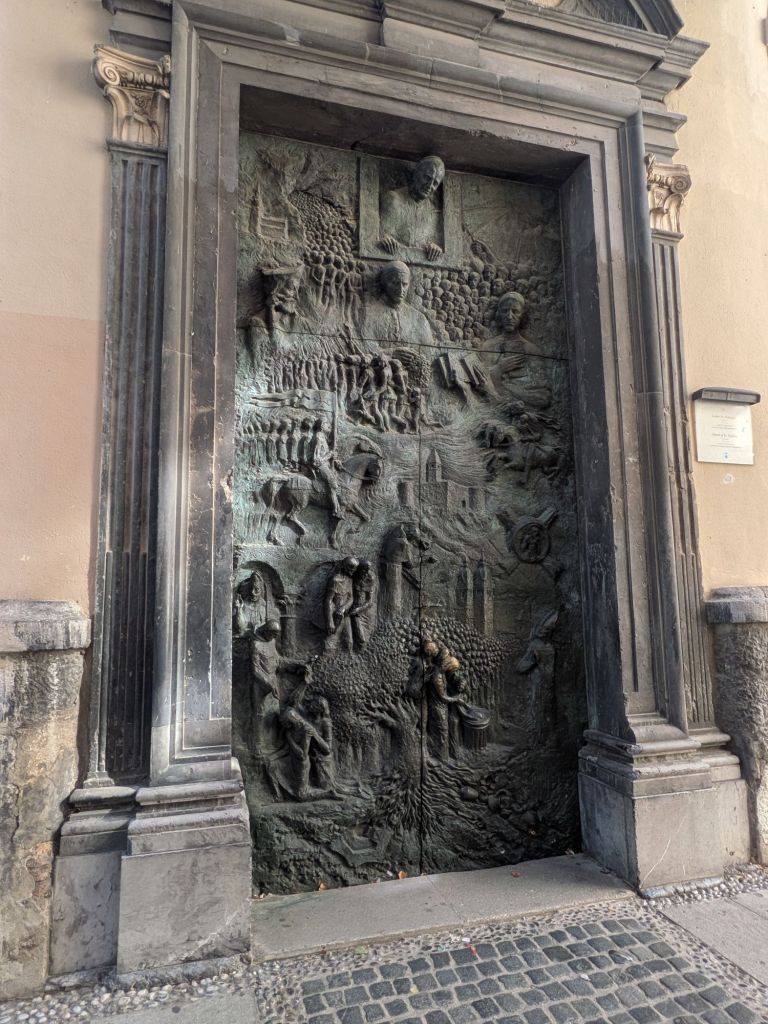
This ornate door on Ljubljana’s cathedral was made by a local sculptor,  depicting the long history of Ljubljana and Slovenia. At the top is Pope John Paul ii, who blessed the door when he visited the city in 1999.

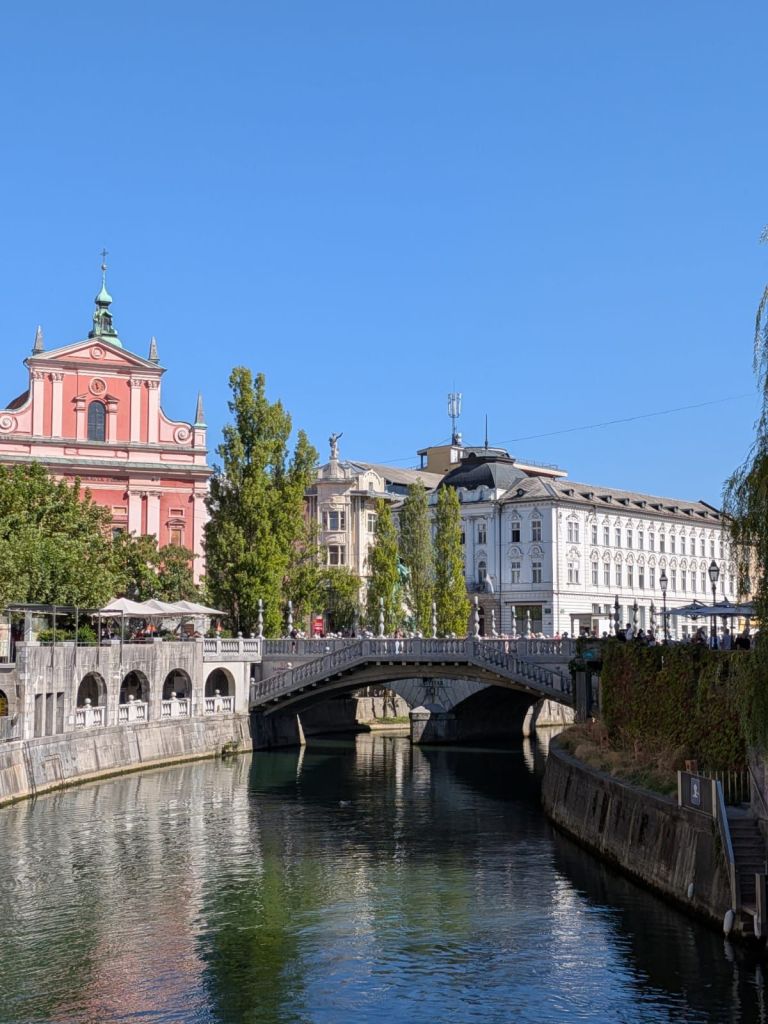
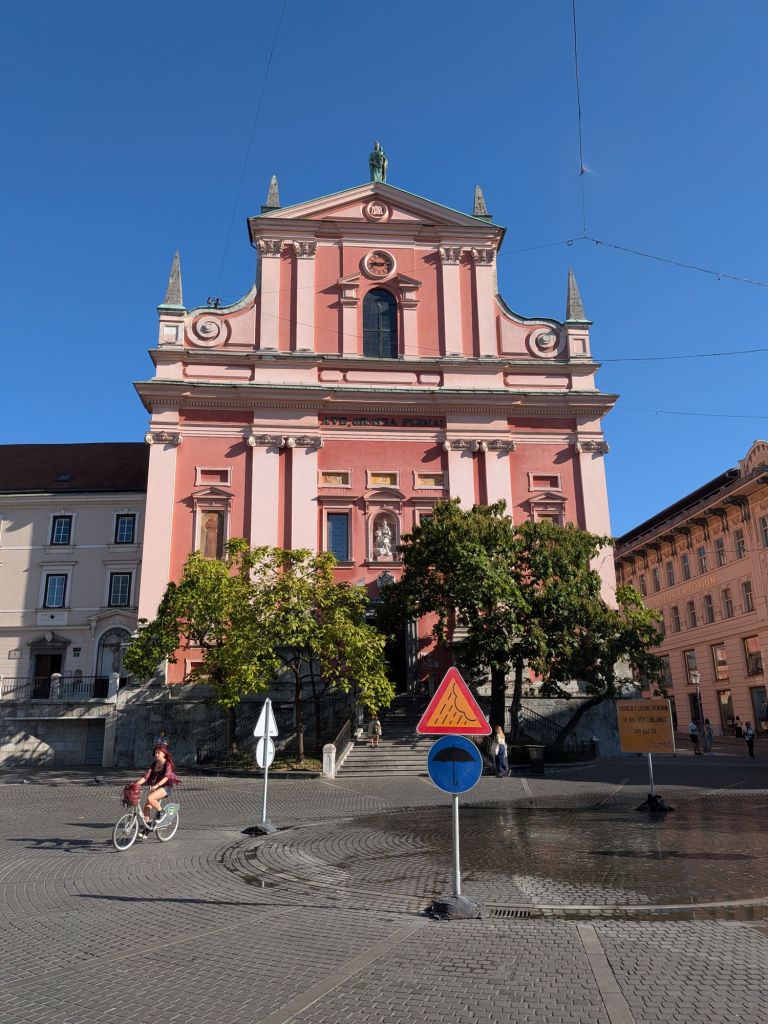
The pink church. It was originally painted red, but the paint faded, and they just kept painting it pink.

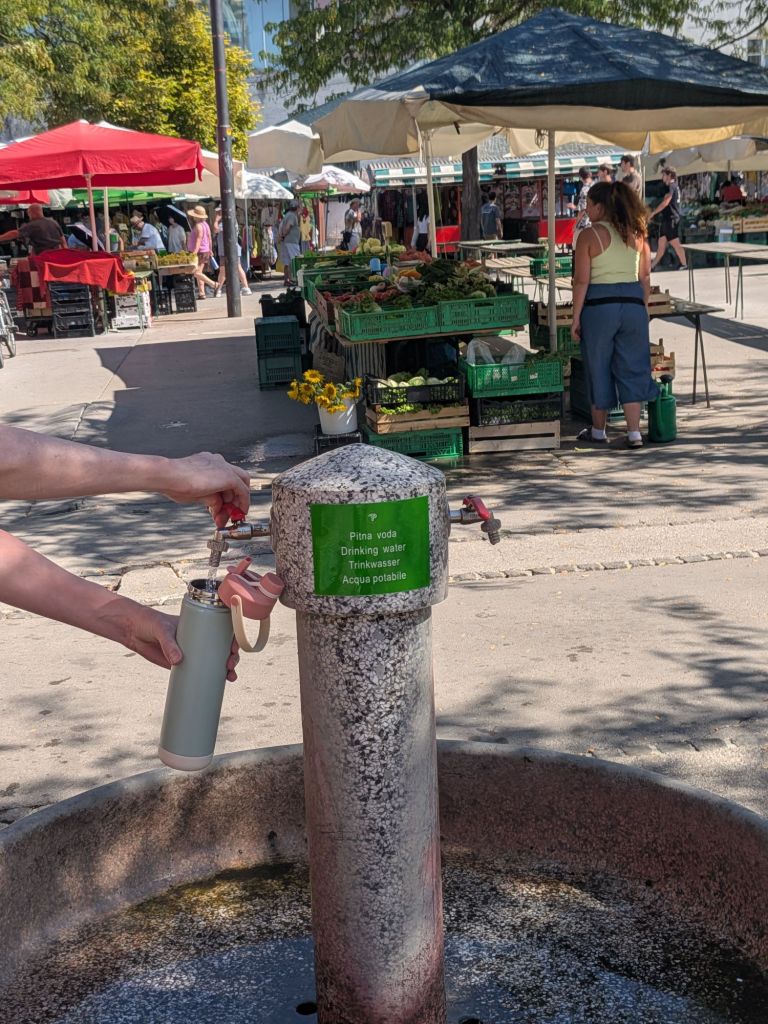
Slovenia has some of the best drinking water in the world, according to the internet. There are fountains everywhere, encouraging people to use less plastic.

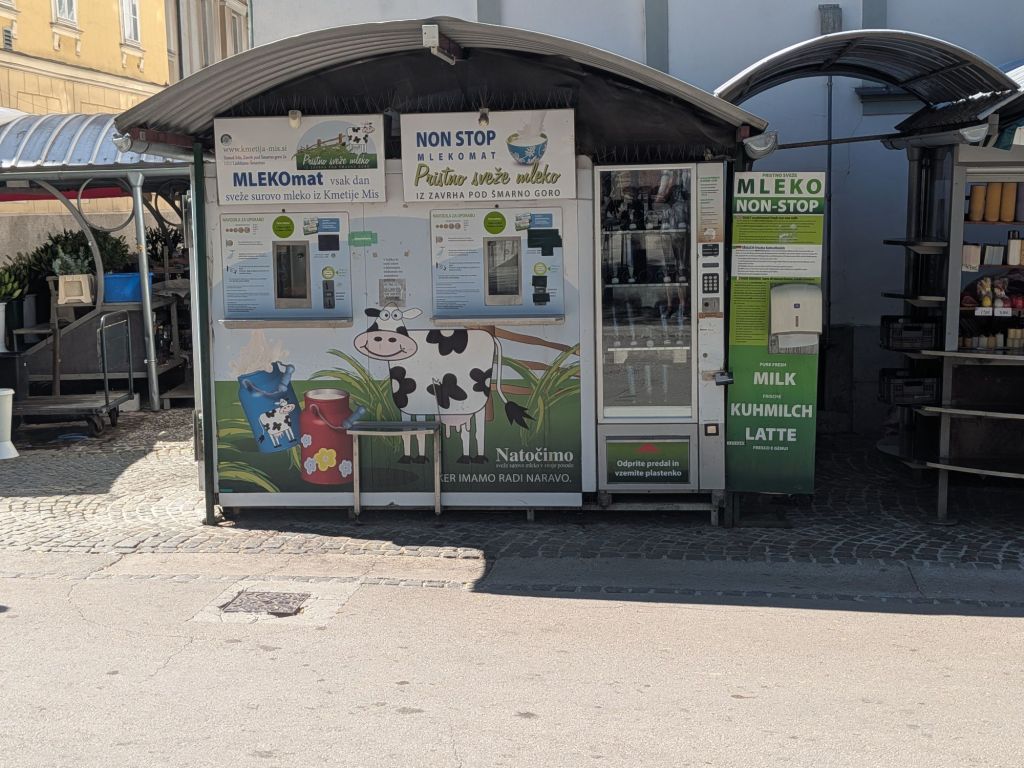
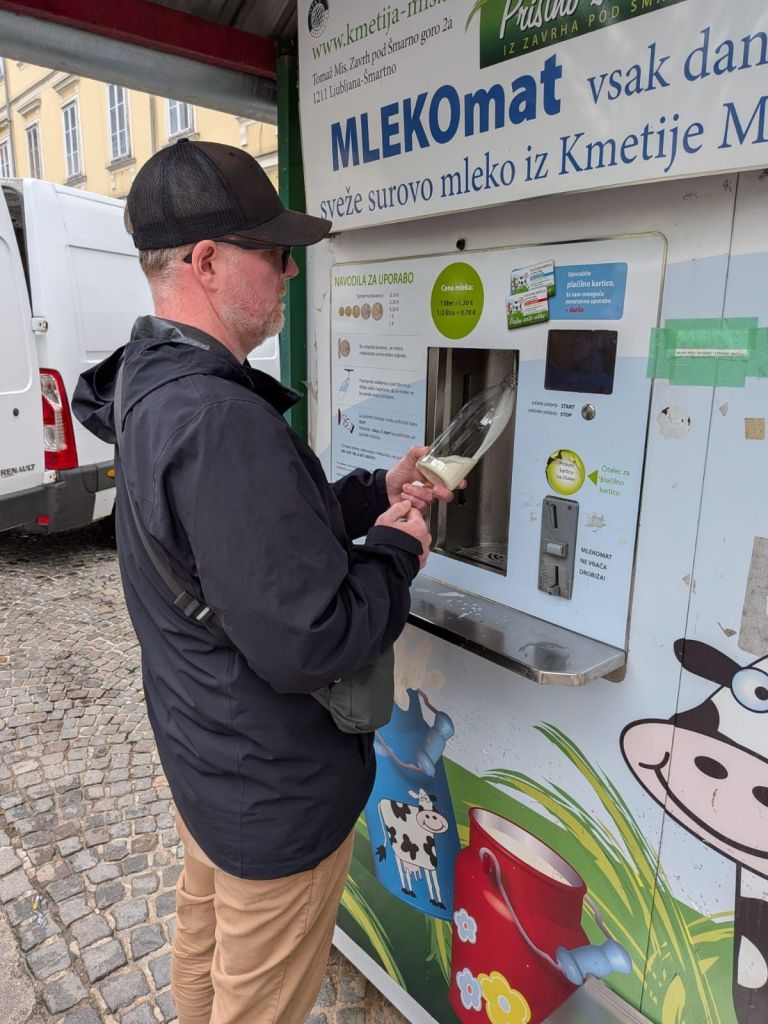
This is a fresh milk vending machine located in the city’s market. It is refilled by local farmers. You can buy an empty bottle at the machine or bring your own, and only cost €0.70 for half a litre.
Yes we bought some.
Ljubljana had a lot going on. A super cheap bike share program, sign up for €1 for a week or €3 for the year, and only pay more if you use a bike for longer than an hour. They had multiple free electric “taxis” that would pick you up and drop you off anywhere in the city center. A community/cultural hub with multiple workshops (wood, ceramic, glass, metal, textile, food) with modern and up to date tools like 3D printers, and laser engravers, all available for people to use.

Slovenia surprised us. It showed us what a small European country could accomplish and inspired us to think about exploring fewer bigger cities, and to point our attention to the lesser known, smaller ones.

Bologna

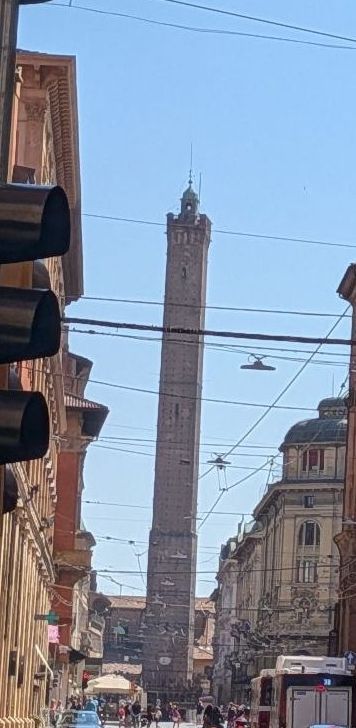
Bologna, the birthplace of Mortadella, and more recently, deep fried tortellini. Where porticos cover wide sidewalks, and centuries old towers lean, threatening to spill their red bricks on foodies below.

We arrived tired and hungry, and made a b-line to a restaurant Carmen had found called Sfoglia Rina. It specialized in fresh pasta dishes. There was a small lineup that moved quickly, and before too long we were gorging on tortellini and gramigna (pasta, yes. I’d never heard of it either). We wandered the city a bit but turned in early.

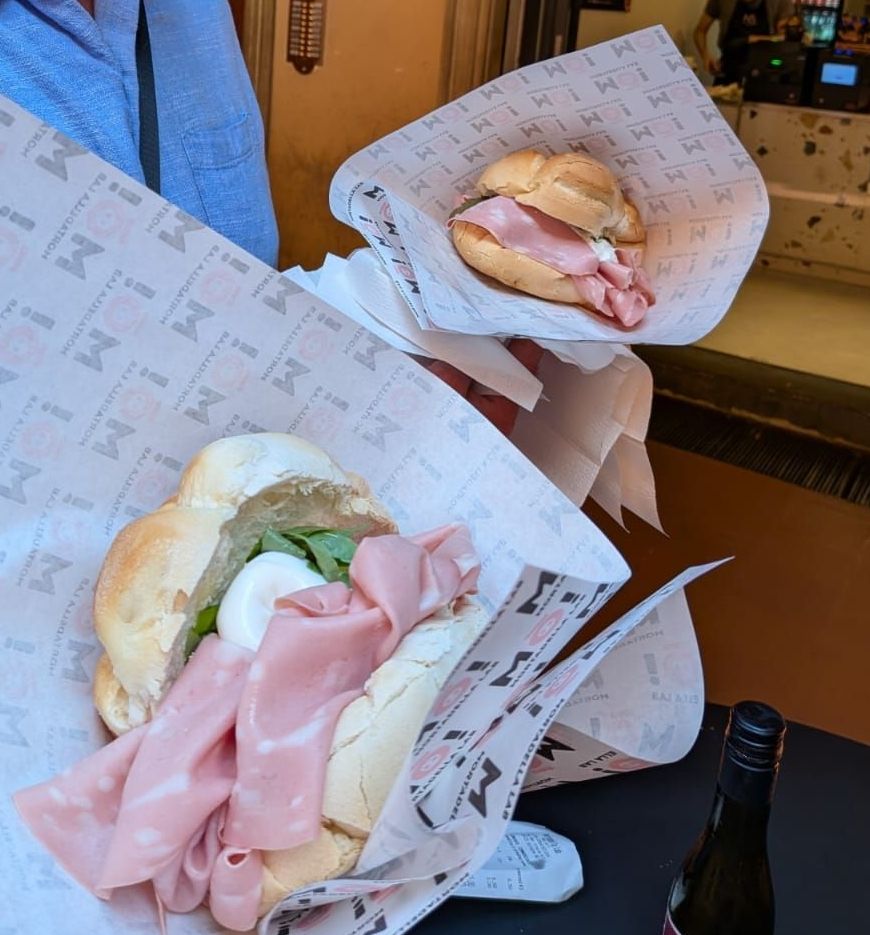
Like I mentioned, Bologna is the birthplace of Mortadella, according to me. And there’s no better way to enjoy it than a sandwich from Mortadella Lab, according to the internet. In hindsight we should have only ordered one, Bologna has so much to offer by way of food, eating a whole sandwich (in my case 1.2) we kind of limited ourselves. But let’s be honest, I’d be hungry soon enough.

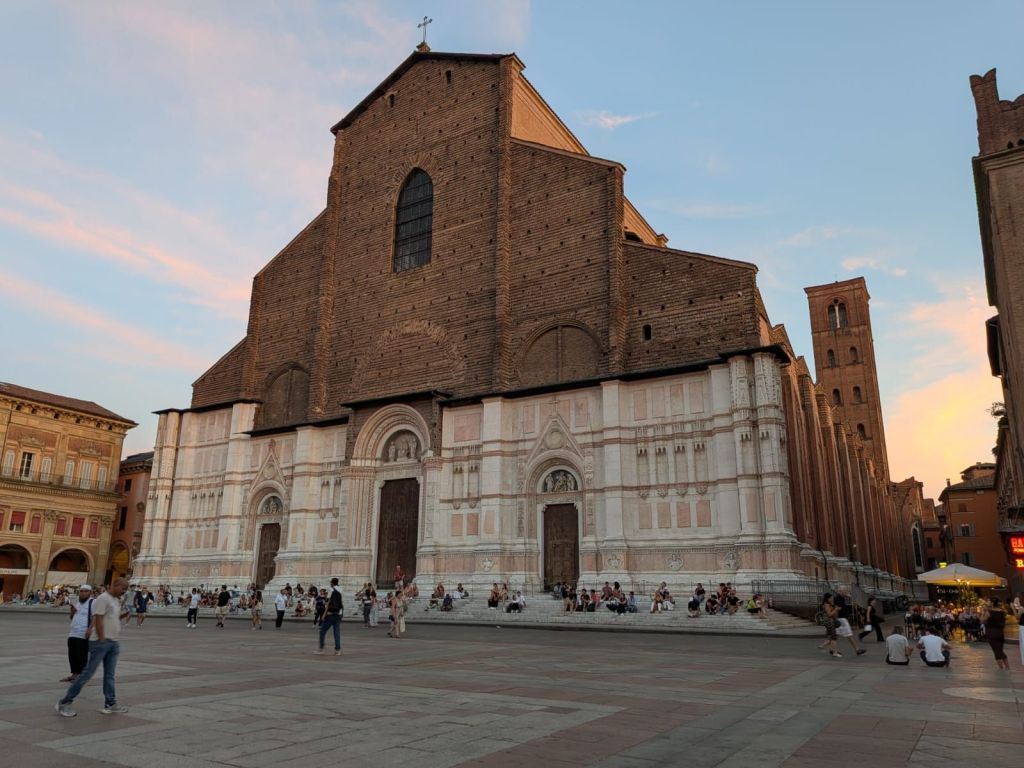
There’s more to Bologna than just the food, there’s a rich history that spans centuries. For example, the unfinished church. The people of Bologna decided to build an enormous church, but engineering, money, and politics got in the way. Fun fact: the church is guarded by the Italian military because inside there’s a fresco depicting the prophet Muhammad in hell!

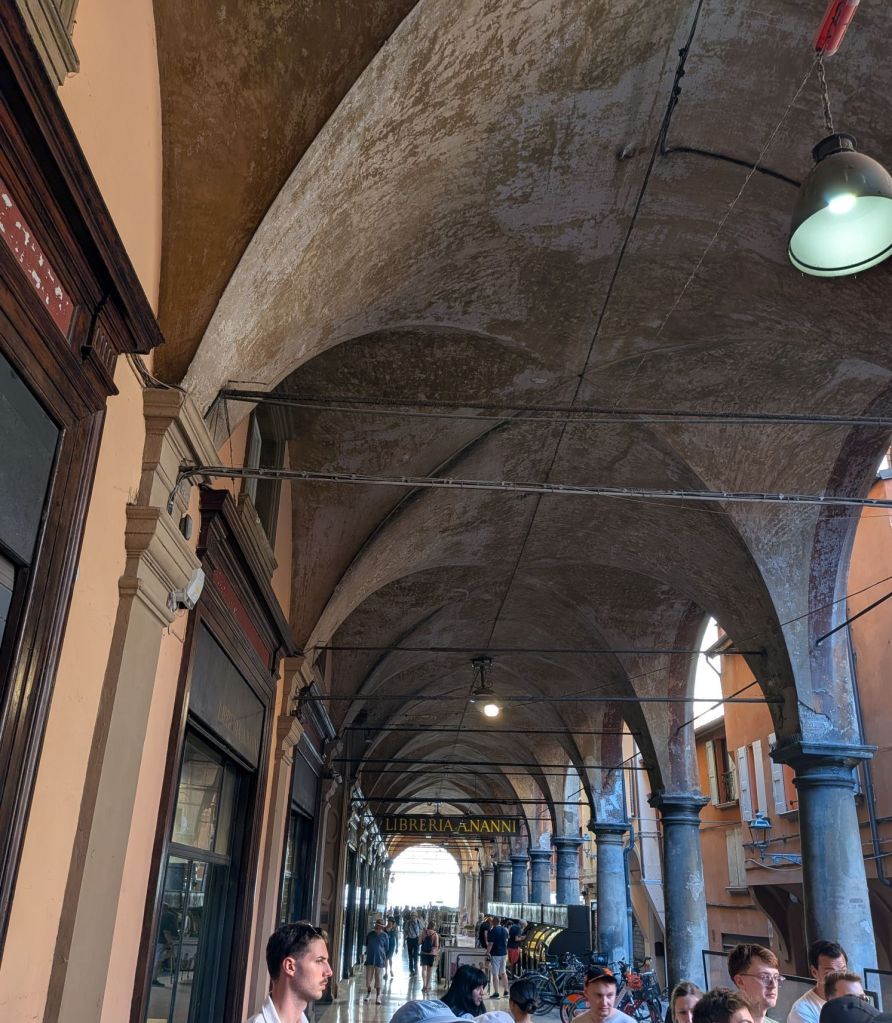
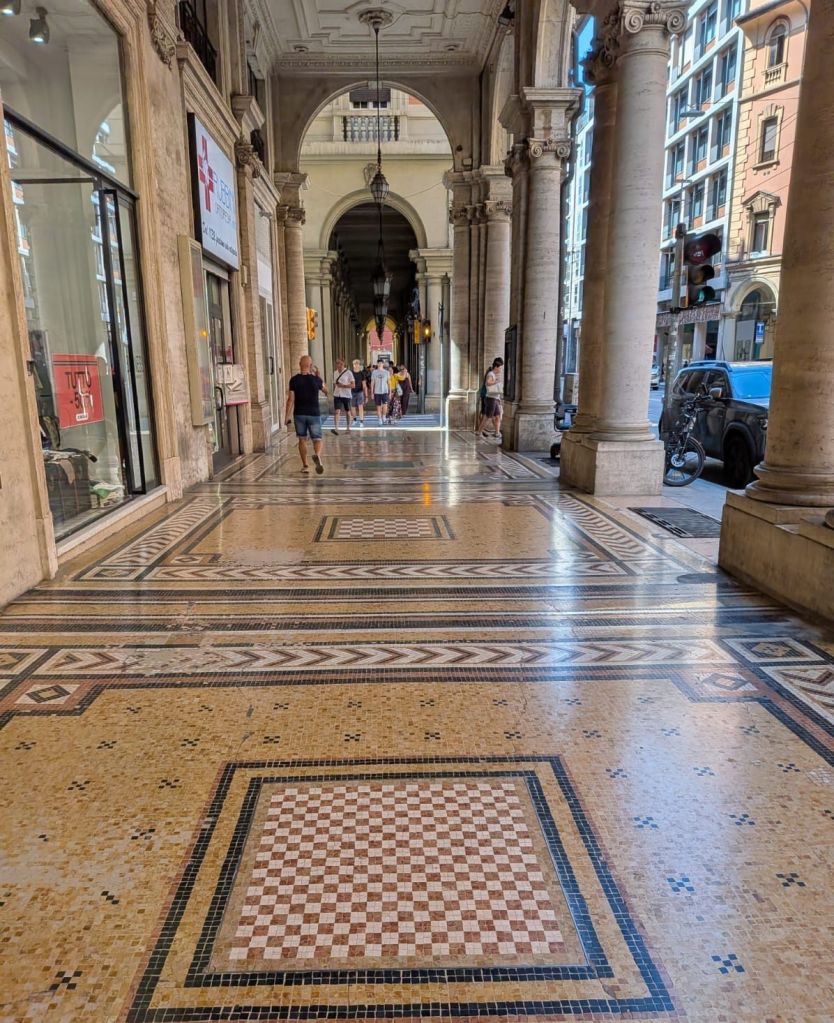
Now for the porticos, so many of the buildings in the old town of Bologna are built over the sidewalks, offering much needed shade or cover from the rain. What started as an illegal hack to gain more square footage in a building, eventually turned into a city mandate. Each portico had to be 7 Bolonian feet high, enough for a man, his horse, and his hat. Of course if you wanted to show your wealth, you could definitely build it higher.

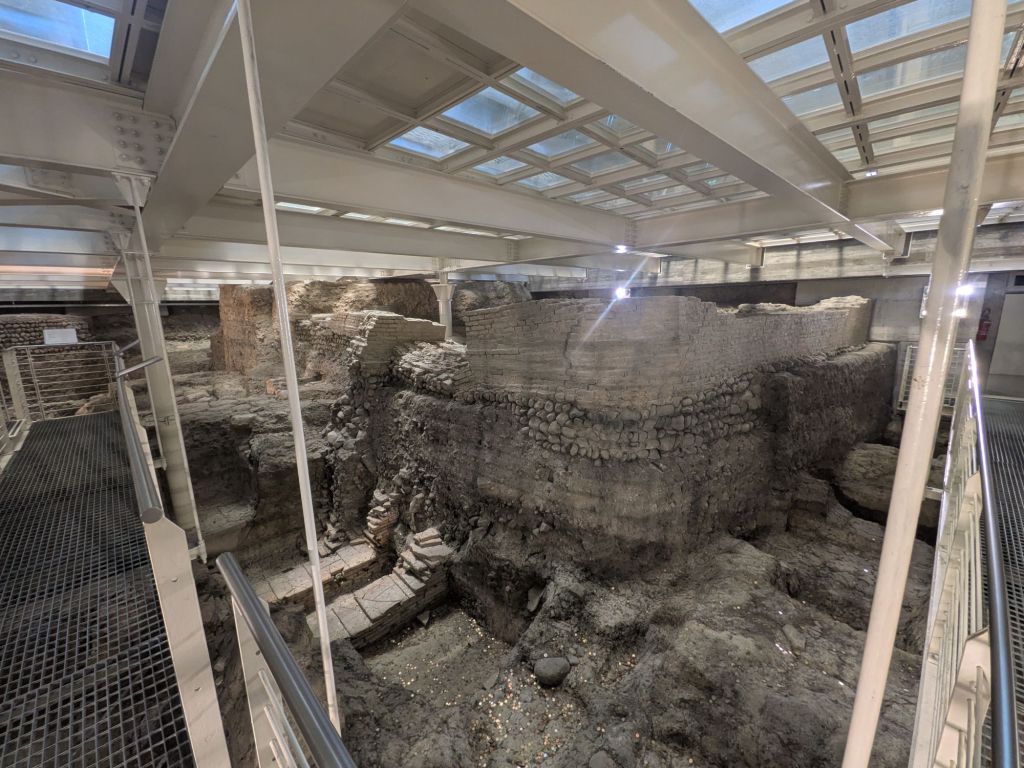
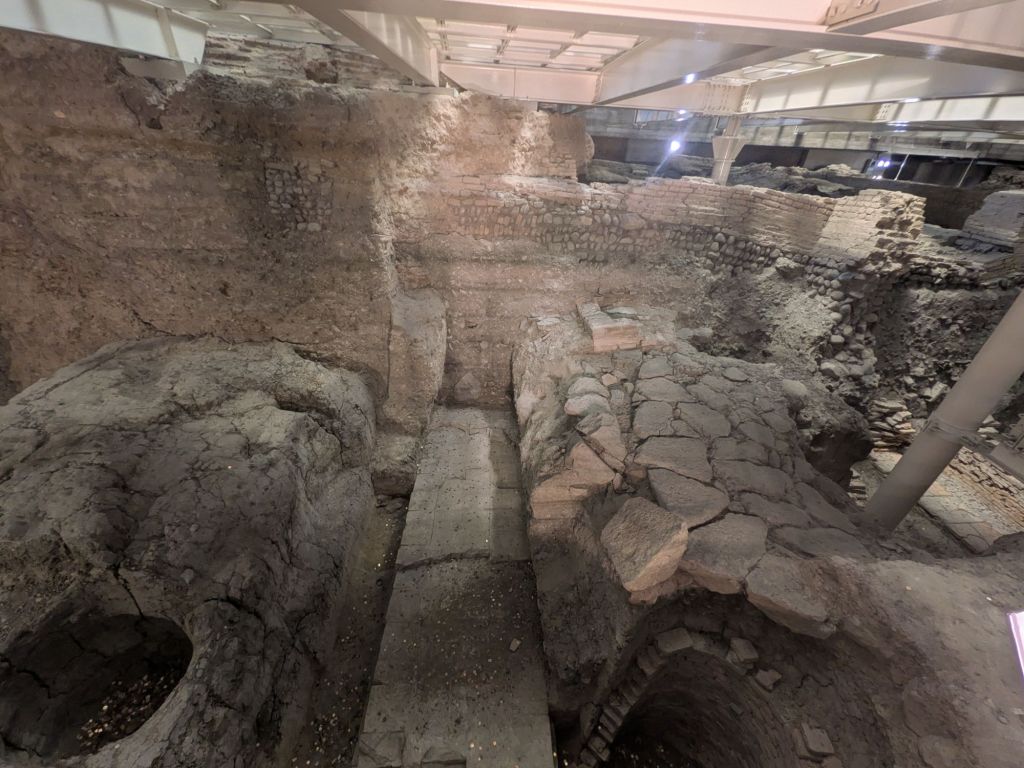
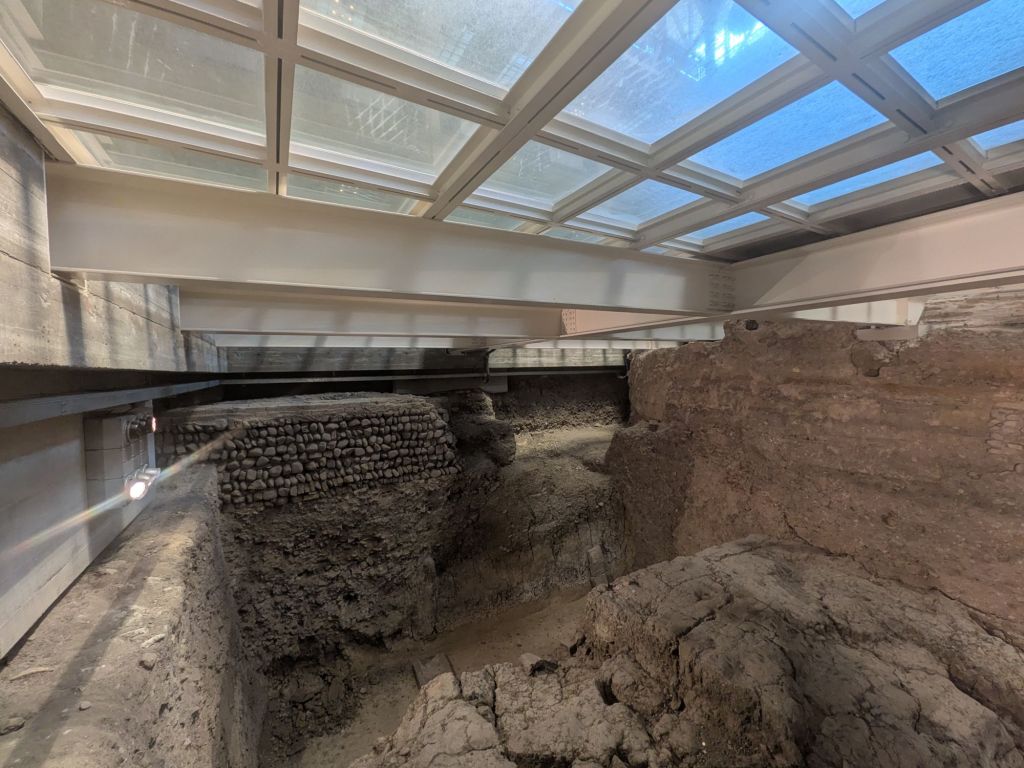
Underneath the library near the main square, there is a small Roman excavation, it’s free to visit, or you can make a donation.

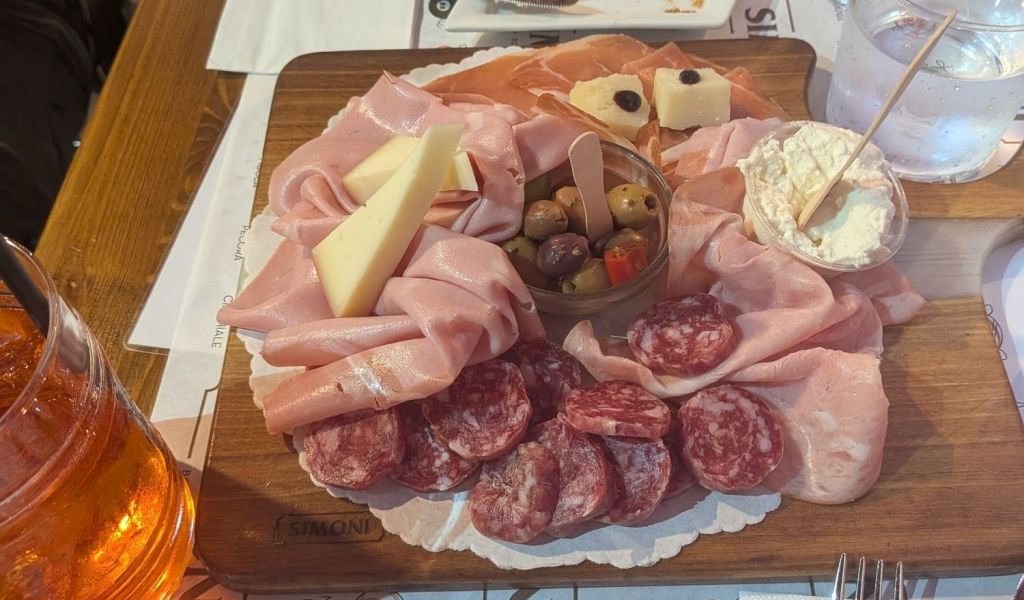
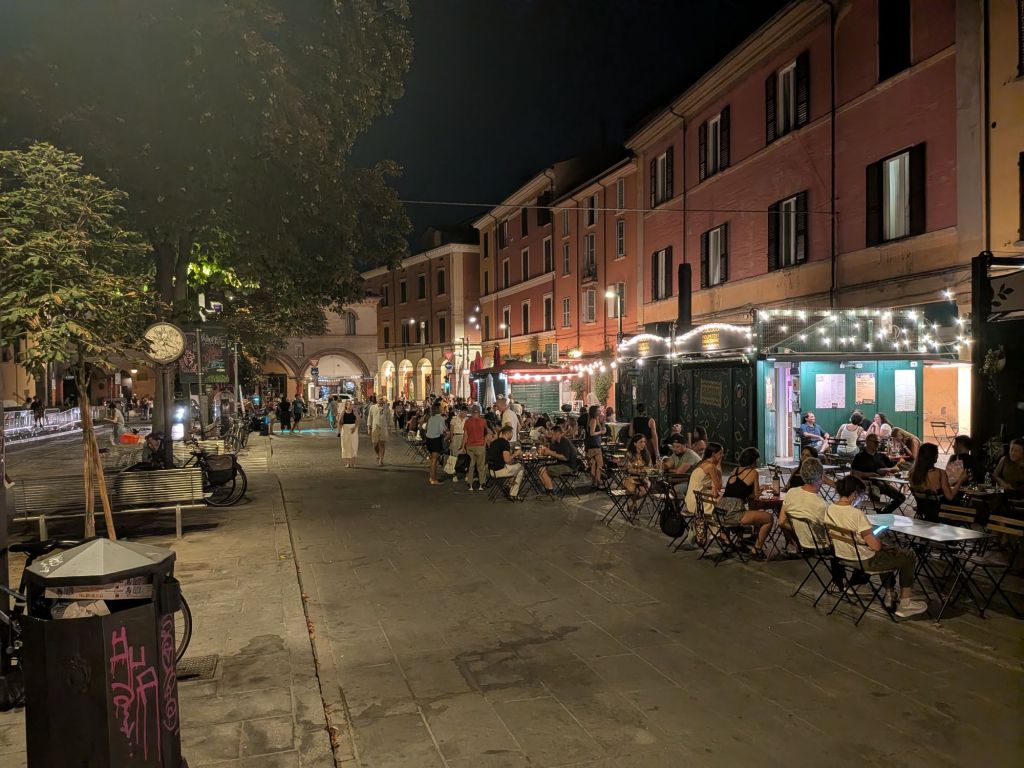
We found a street lined with a bunch of street food vendors, and we were able to have a cocktail, some Bolognian classics to eat, and a much needed salad – no more scurvy for us. The place was lively, and just as we left, a swing dancing demonstration started.

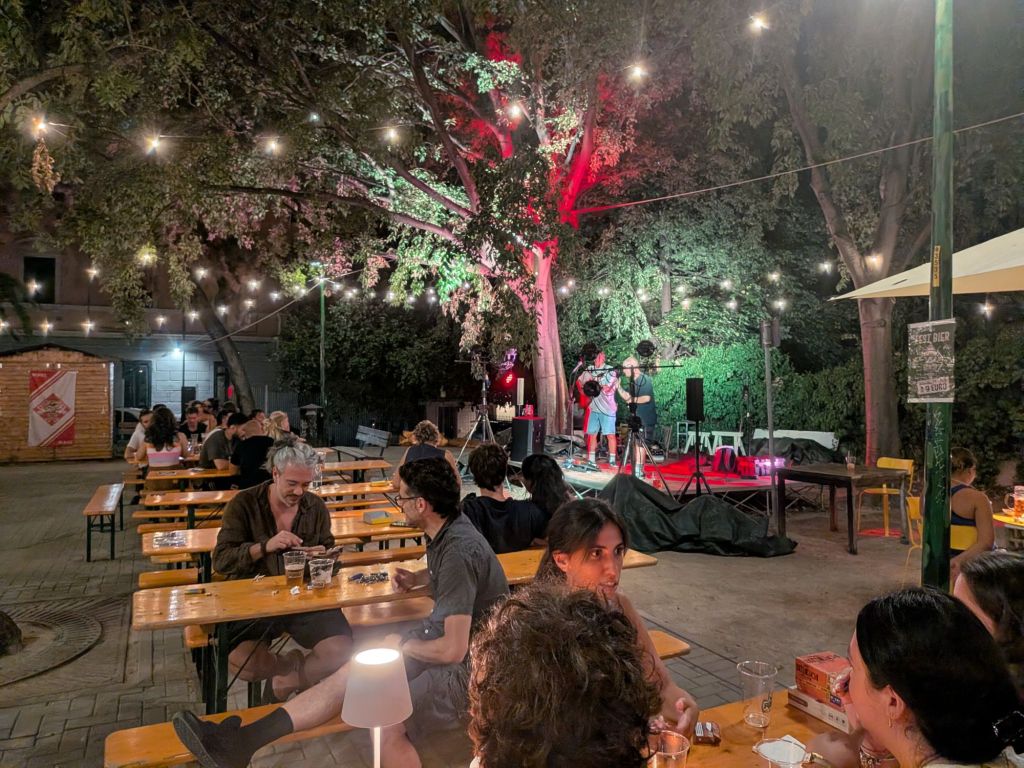
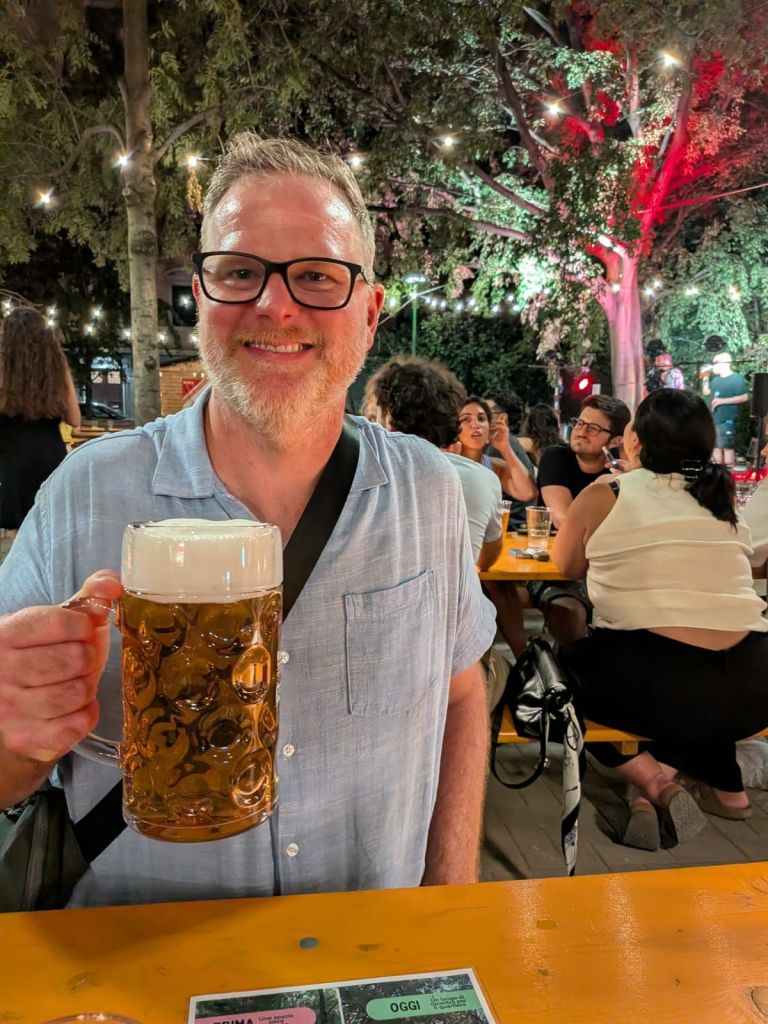
Another example of Bologna’s excellent use of public space, just steps away from our accommodation, there was a park that had been recently transformed from a barely used space, to an open venue with live music, local vendors and huge beers where a serendipitous mistake led me to getting two beers instead of one. Lucky me!

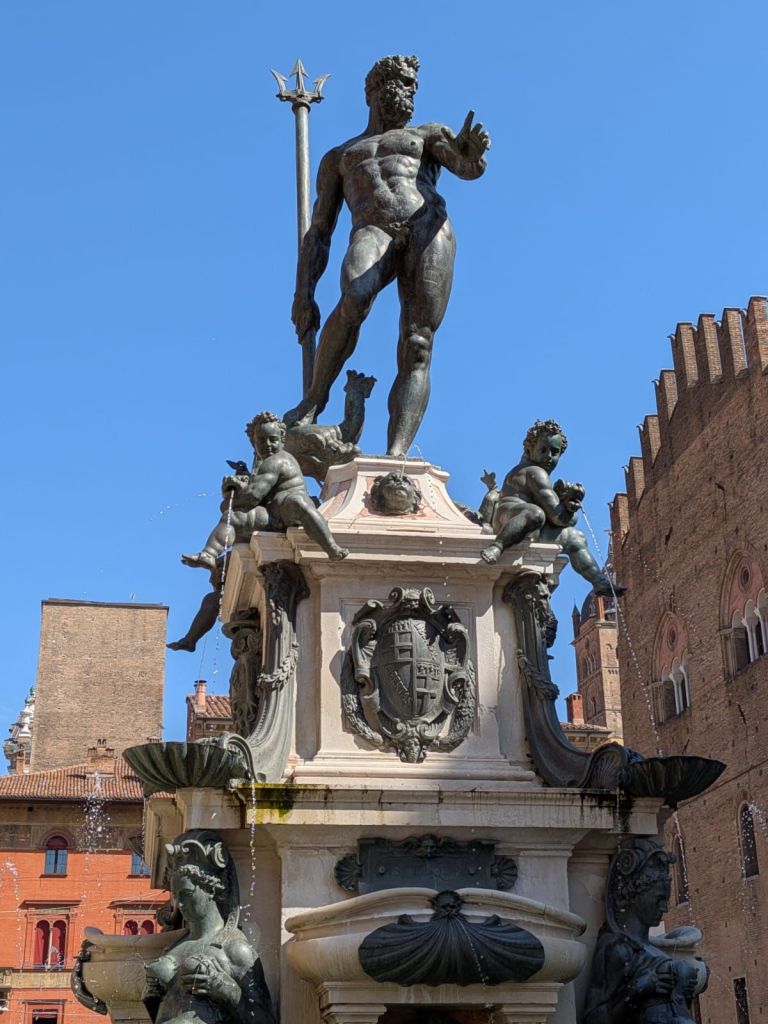
Bologna was a great place to visit, there was lots to see, and even more to eat. We wished we had more time here to explore. We can’t say enough good things about the city, its statue of Neptune completed in 1566 even has an inside joke about penis size. Don’t take my word for it, look it up.

Monterosso al Mare and the Cinque Terre.

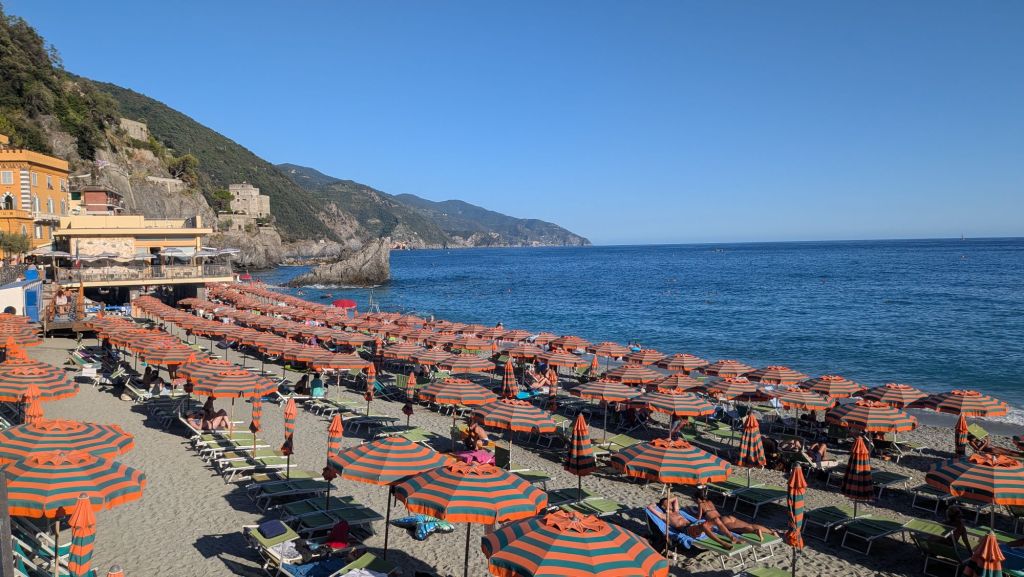
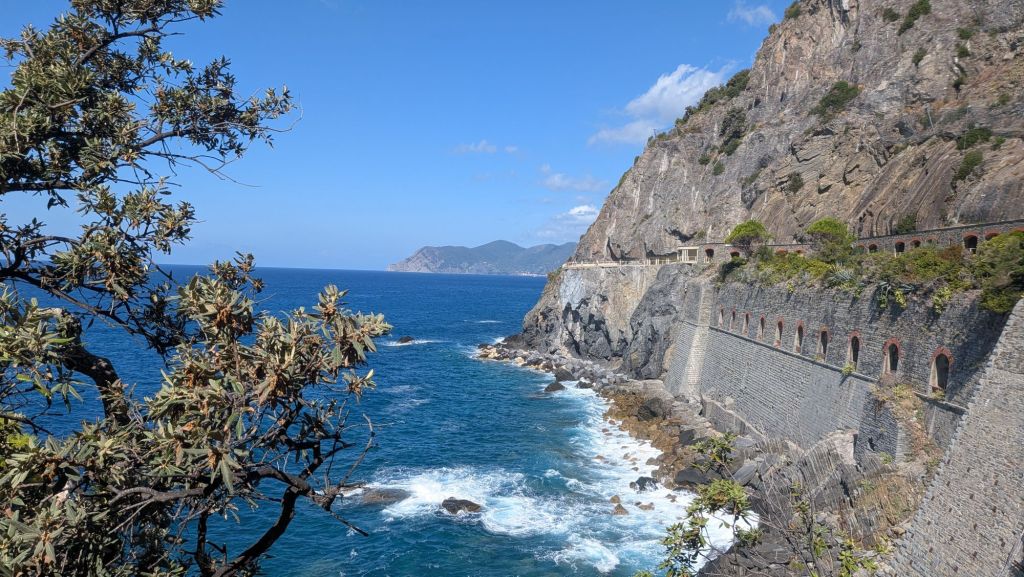
We arrived in Monterosso al Mare in the afternoon, and it was hot. One look at the shimmering blue of the Mediterranean and all I wanted to do was jump in. First we had to check in to our hotel, but then after that we’d go swimming. Before we jumped in, we got an obligatory Spritz from a small sidewalk bar, walked through the tunnel that separates the two parts of town, found a spot on the beach, and went for a swim. The water was so refreshing, and the waves gentle.

That night we had a pizza dinner at a place just steps from our hotel. We walked into the old town, past all the shops and restaurants, but we were both tired from the travel day so we called it early. We stopped at a small grocery store and bought some yogurt and fruit to keep in our room, and soon realized we had no means to eat the yogurt. A problem for tomorrow.

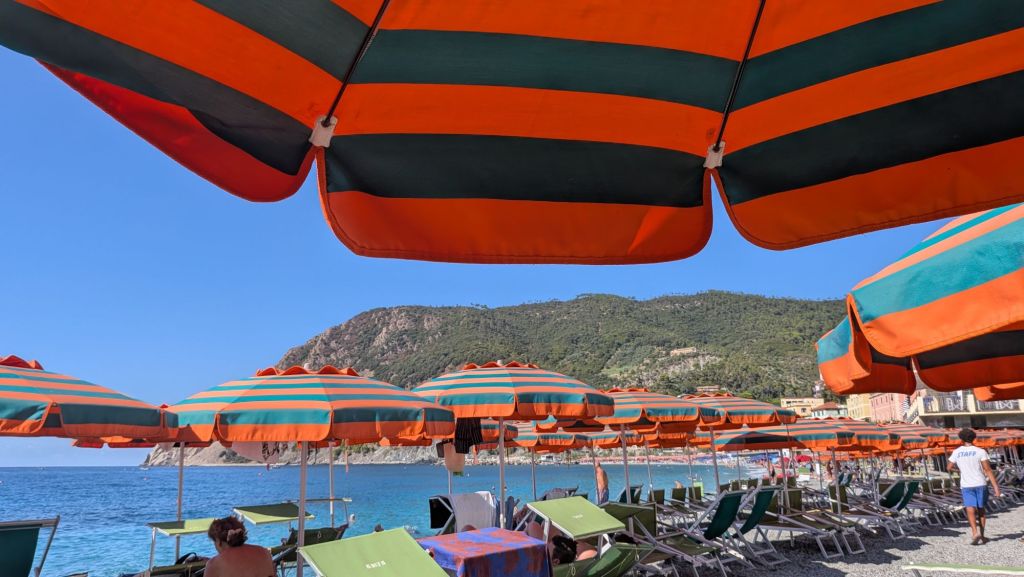
Beach Day! After a good rest, lathering up with sunscreen, a not so great breakfast and one act of larceny, we headed to the beach. We made reservations at a beach club for chairs that could be described as the worst ones on the beach. Situated right next to the garbage cans, with a broken umbrella, they served us well. The Mediterranean was calm in the morning, and the swimming was cool and refreshing. We spent most of the day there, with a break for lunch with our friends. When we came back to the beach the waves had picked up a bit but the water was still inviting enough for a few more swims.

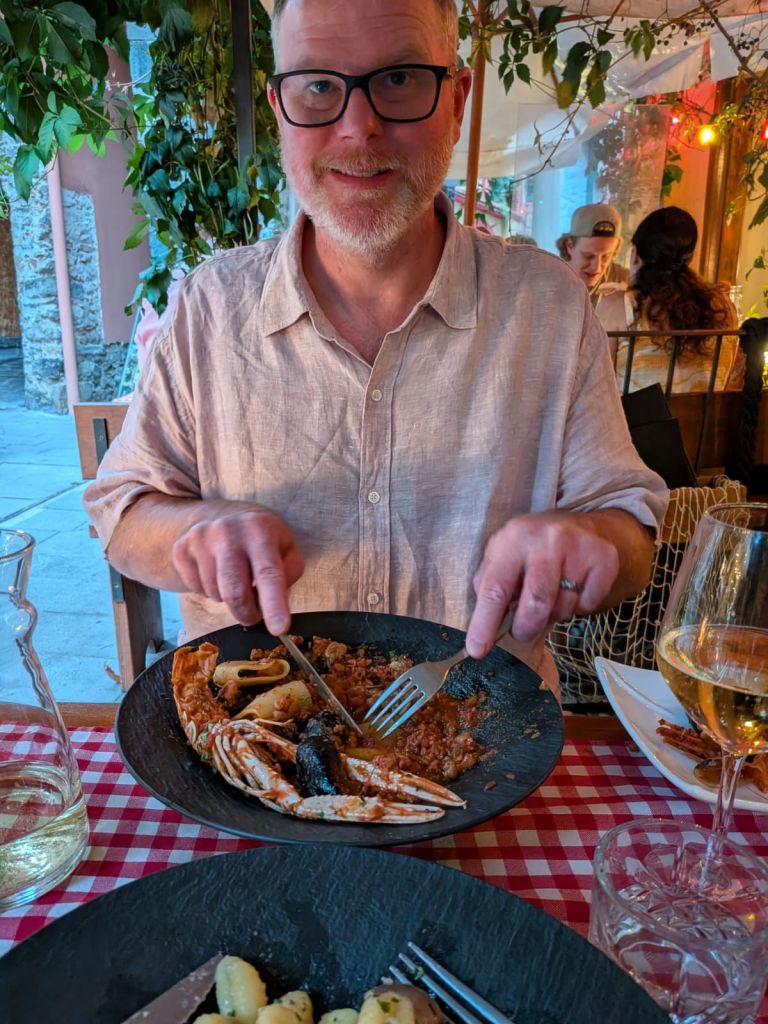
That’s me eating dinner. So good. Clams, mussels, and scampi with pasta in tomato sauce.

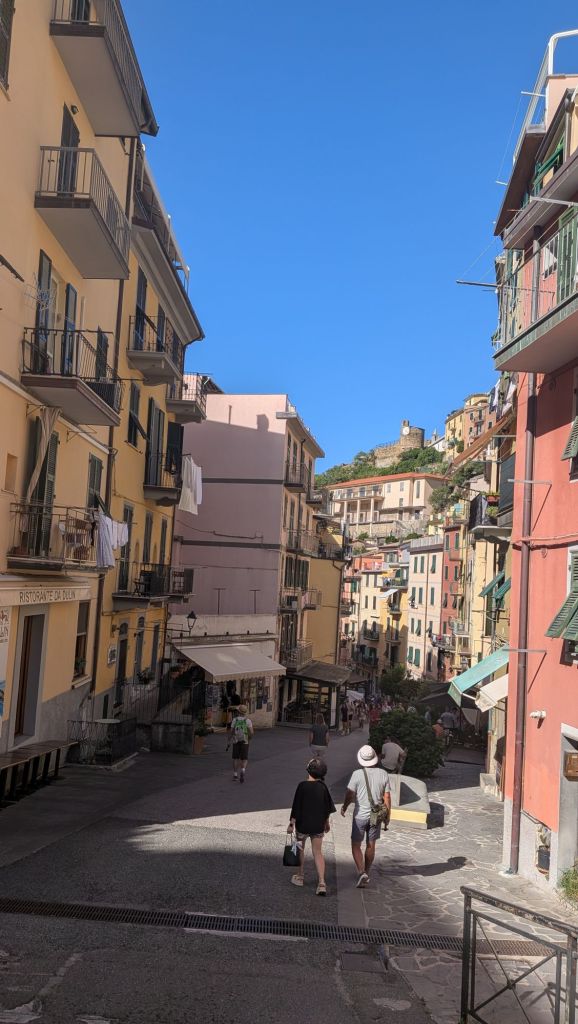
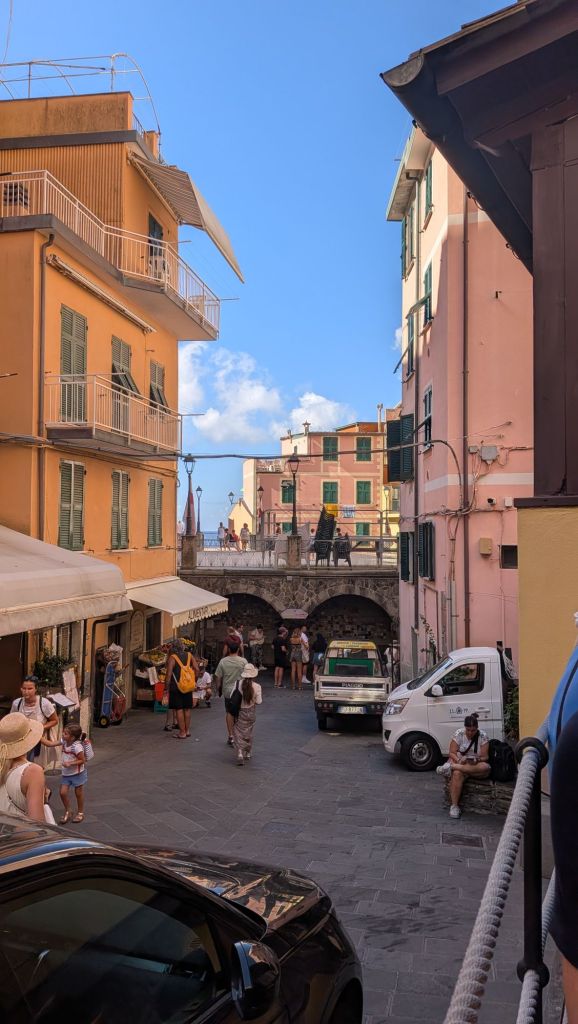
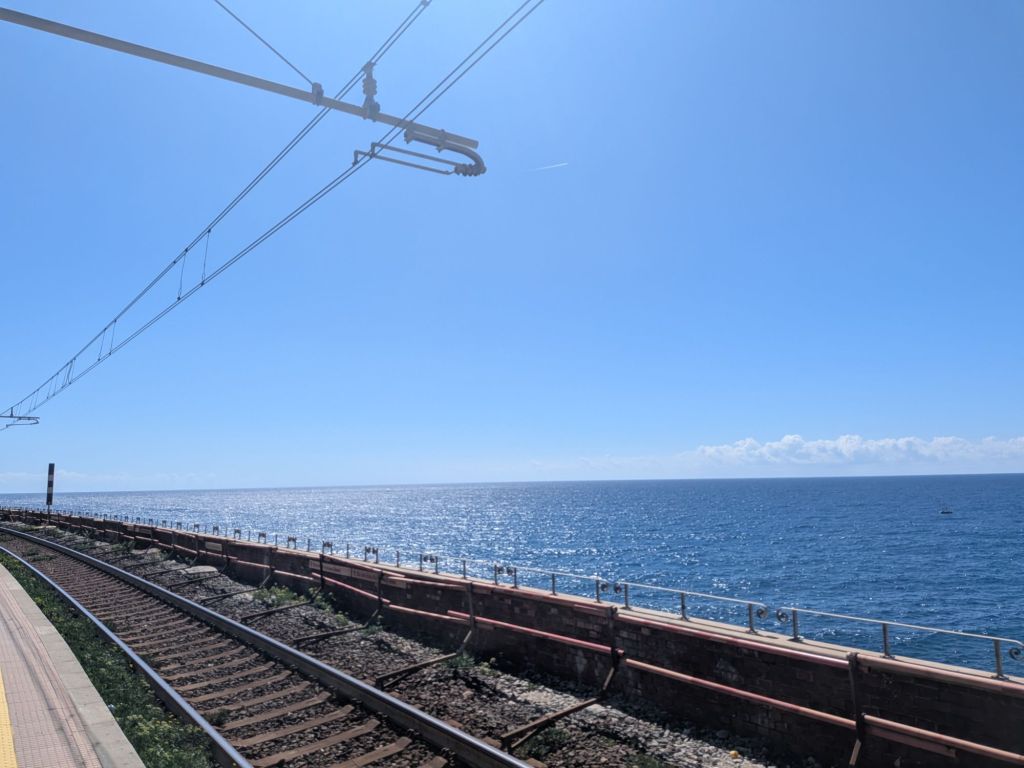
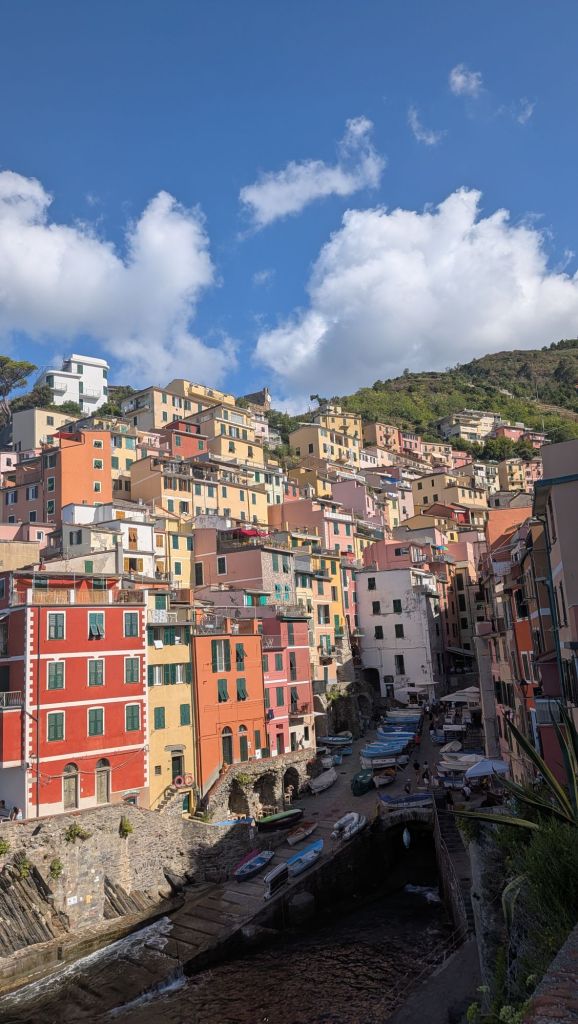
The next day we went to some of the other towns in the Cinque Terre. Each one with their own charm and character, but all sharing the same iconic steep cliffs, pastel colours, and abundance of restaurants, shops and tour groups. It was busy with people from all around the world, taking in the views and atmosphere.

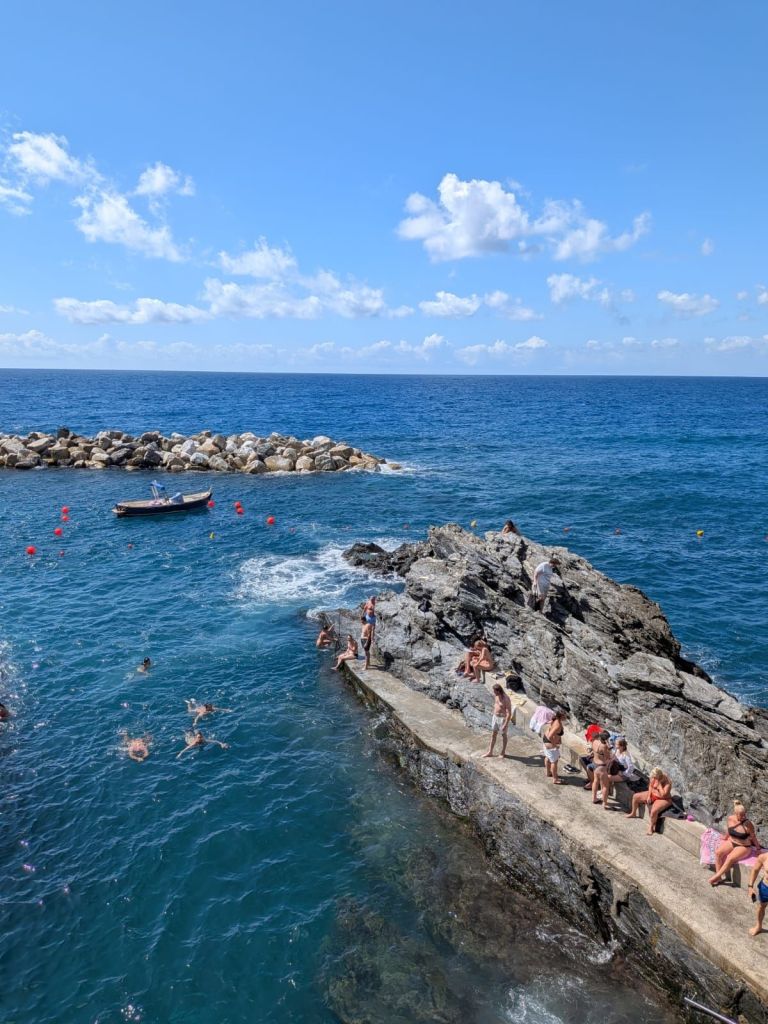
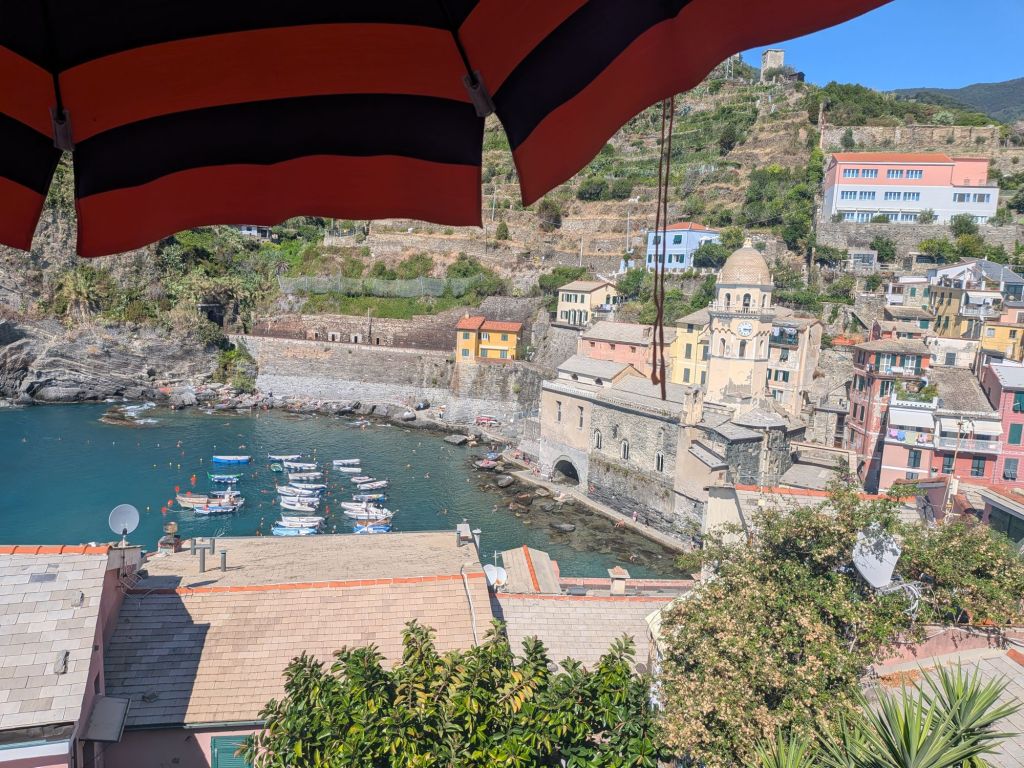
We swam in the bays of Vernazza and Manorola, had drinks and a snack at a restaurant overlooking the water below. All in all a great day.

That night would be our last night with our friends. They would be leaving for Florence in the morning, and we would be heading to Bologna. We had dinner together and capped the night off with a few drinks at Midi Bar. Bed time was 11pm, late for us, but worth it to squeeze out a few more hours with some good people.

The Dolomites. Days 4, 5, 6, and 7.

I decided to condense the rest of the hike into one post, I’m a little too far removed from those days, and none of them were as harrowing as the first two.

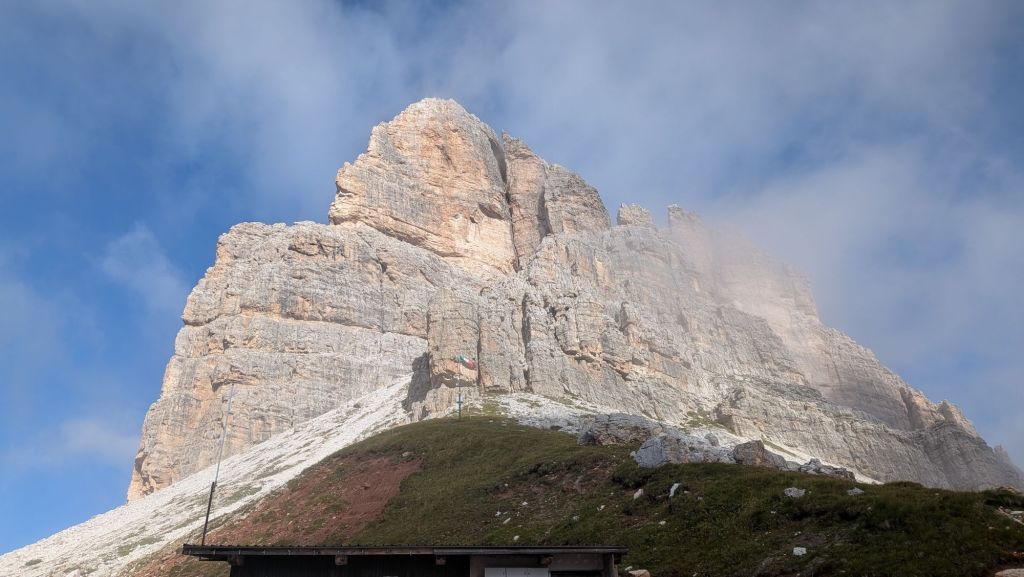
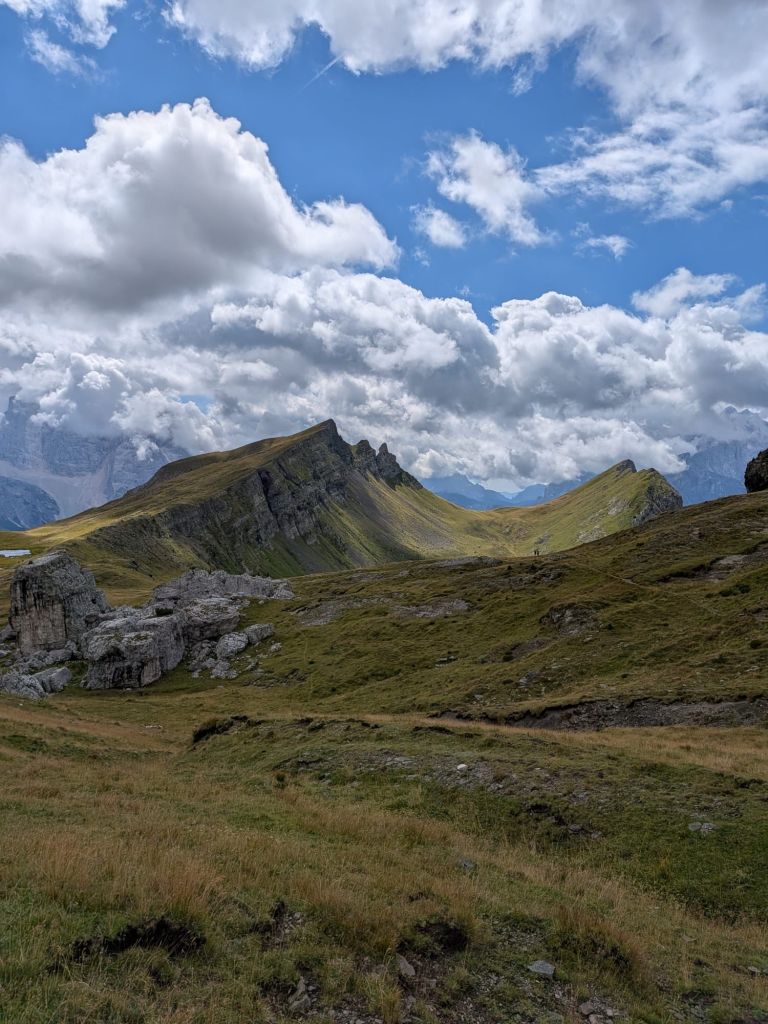
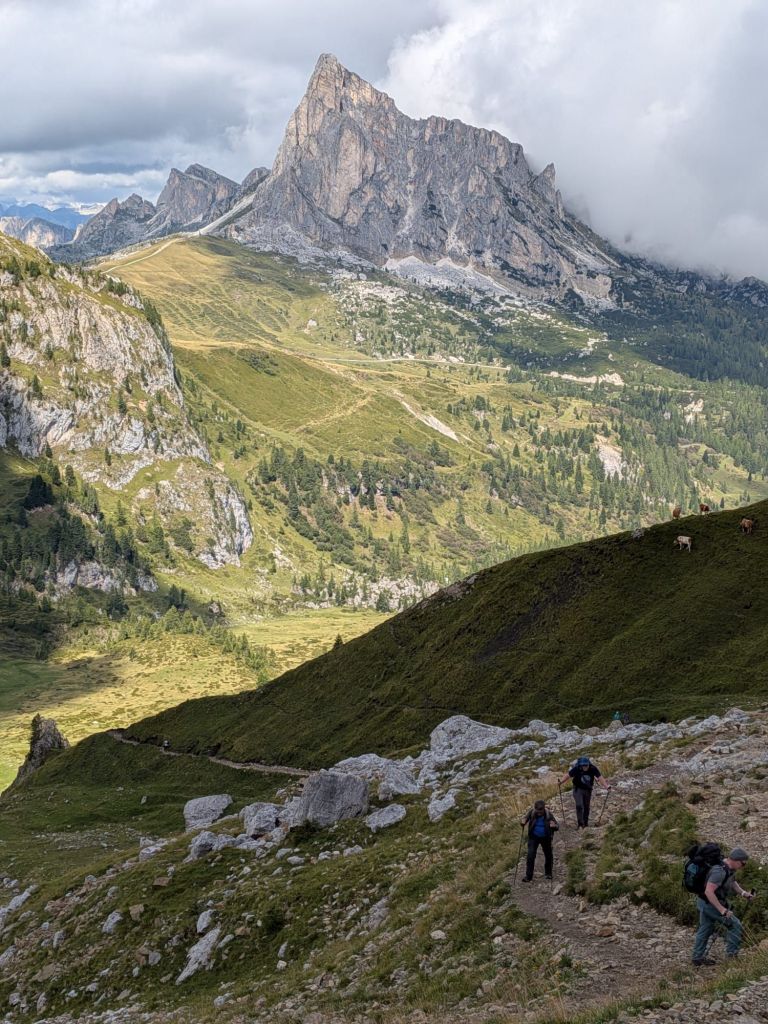
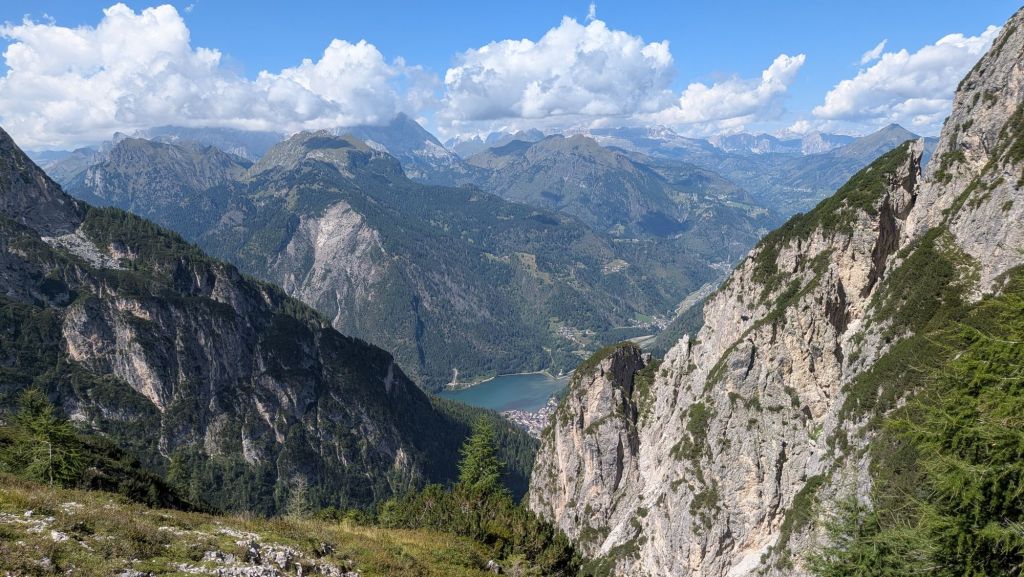
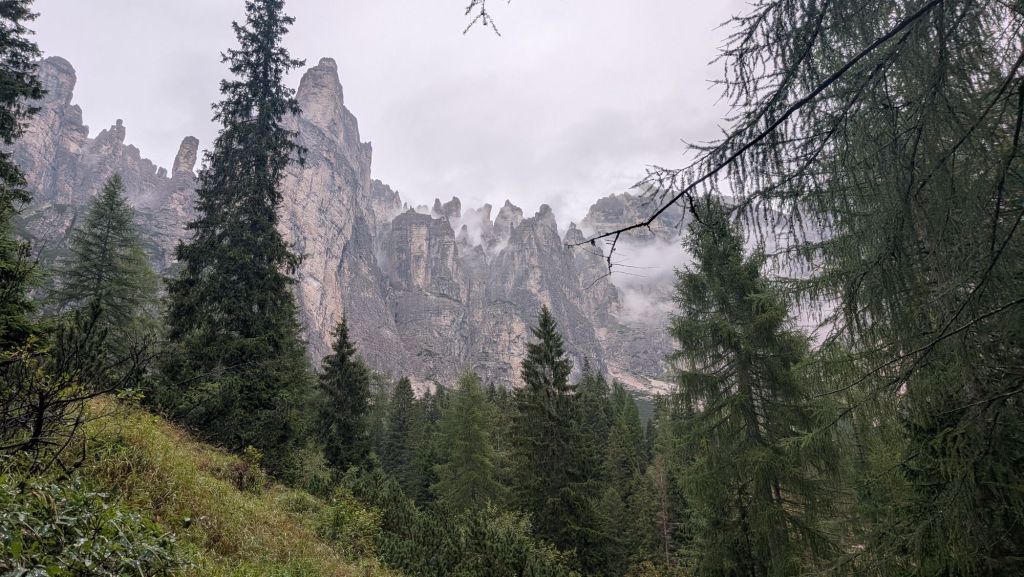
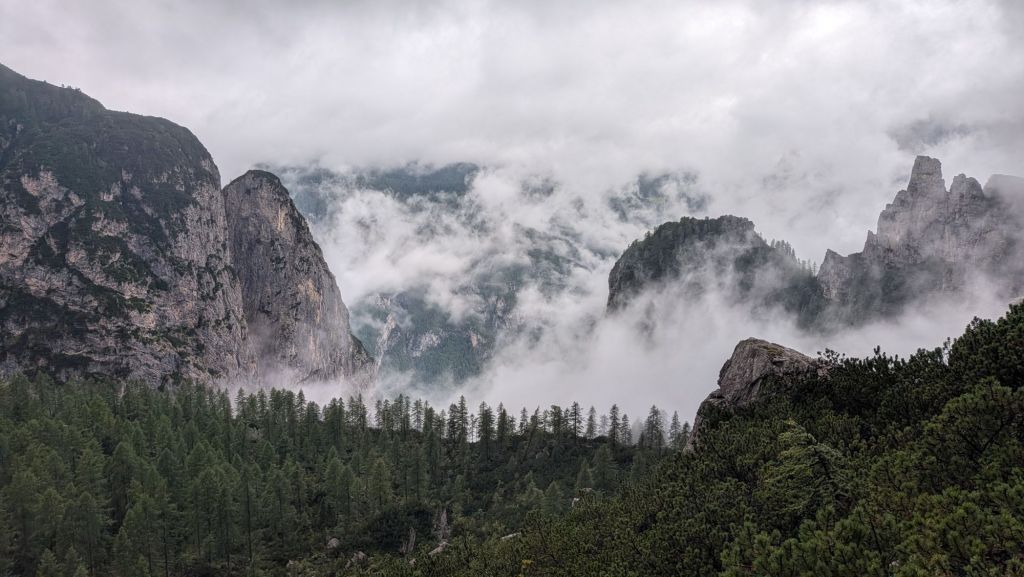
Day 4 turned out to be one of the more enjoyable days on the trek. It started off a bit foggy, and after a bit of a fortuitous wrong turn, we hiked approximately 16.5km that gave us the most amazing views.

It was a great day, not too hot, and not too strenuous. The rest day that we had the day before definitely helped. The day ended at Rifugio Staulanza where we were able to soak in a hot tub before dinner.

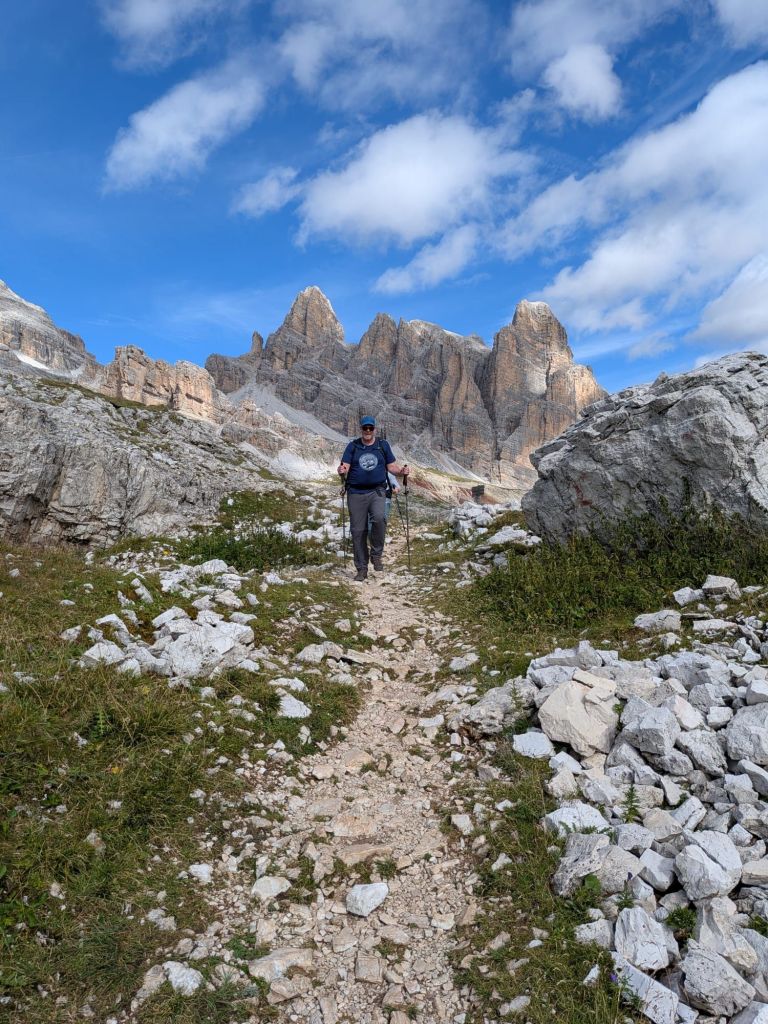
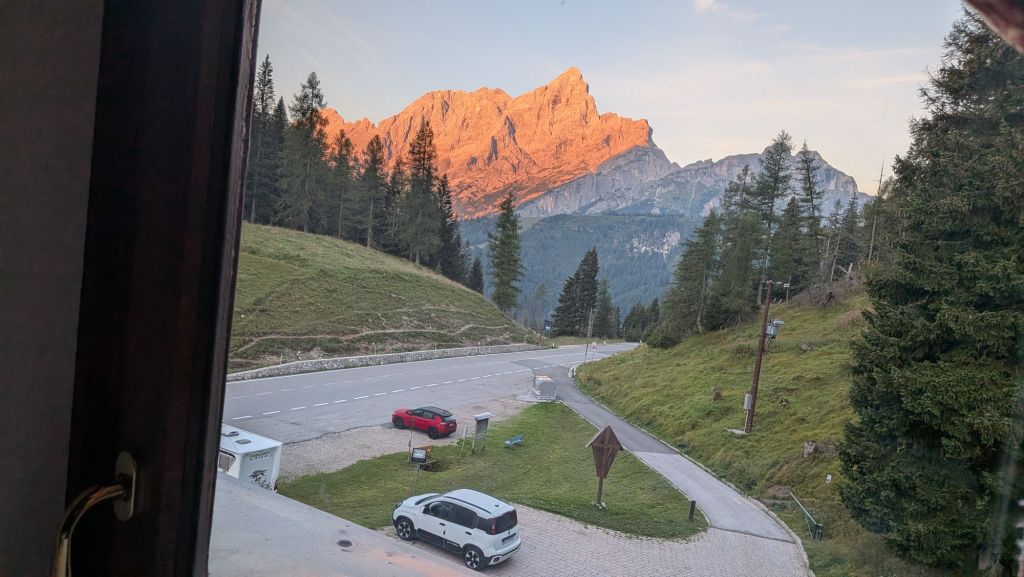
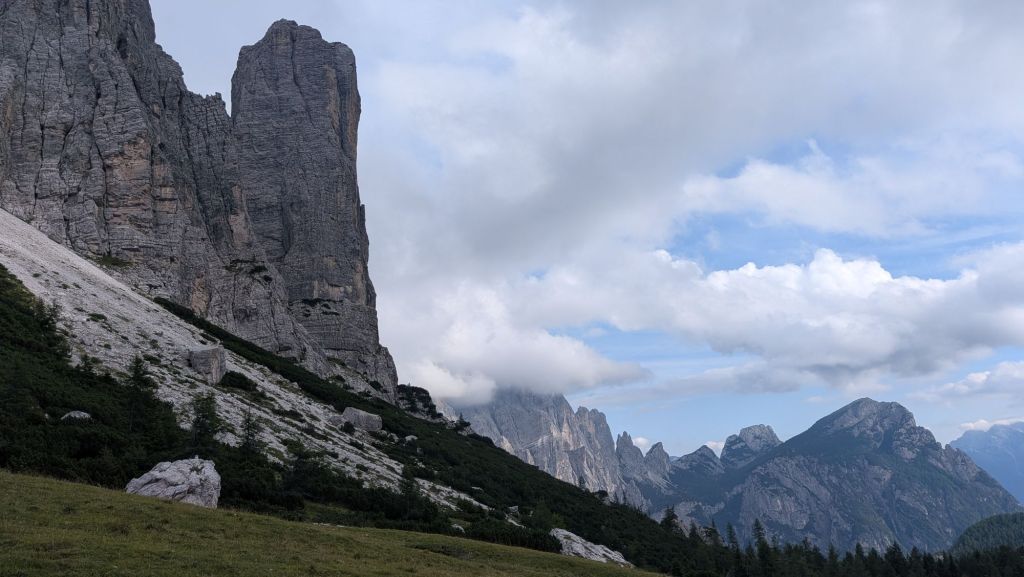
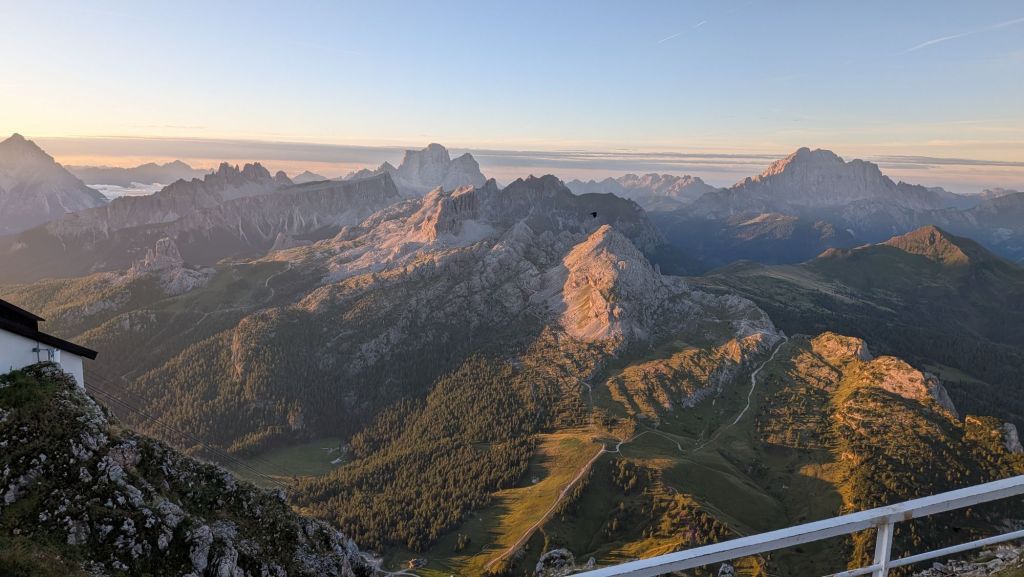
The morning of day five gave us more golden hues. It was a bit of a more difficult day with a few decent climbs, but the views and rewards were  worth it.

We ended up at Rifugio Vassoler where we enjoyed another 3 minute shower and some delicious house infused grappa.

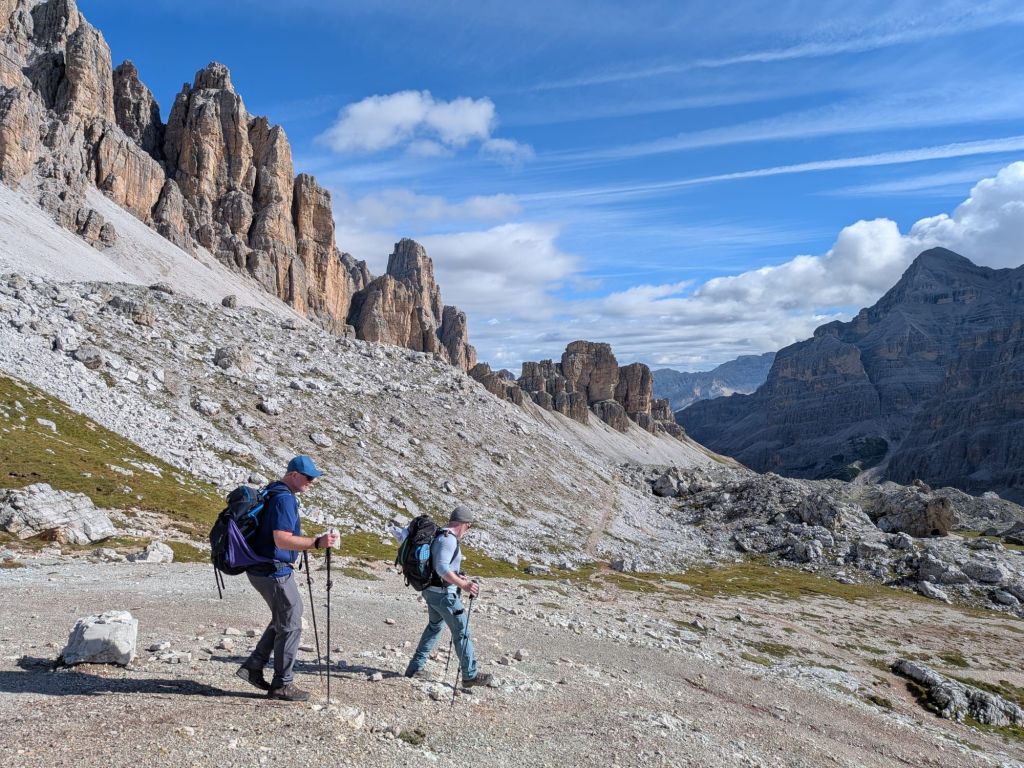
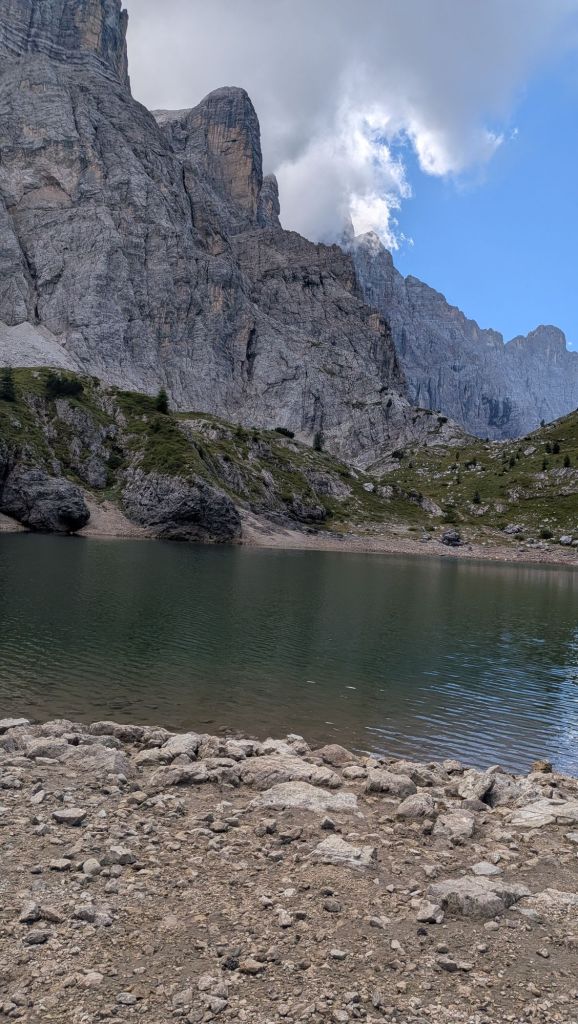
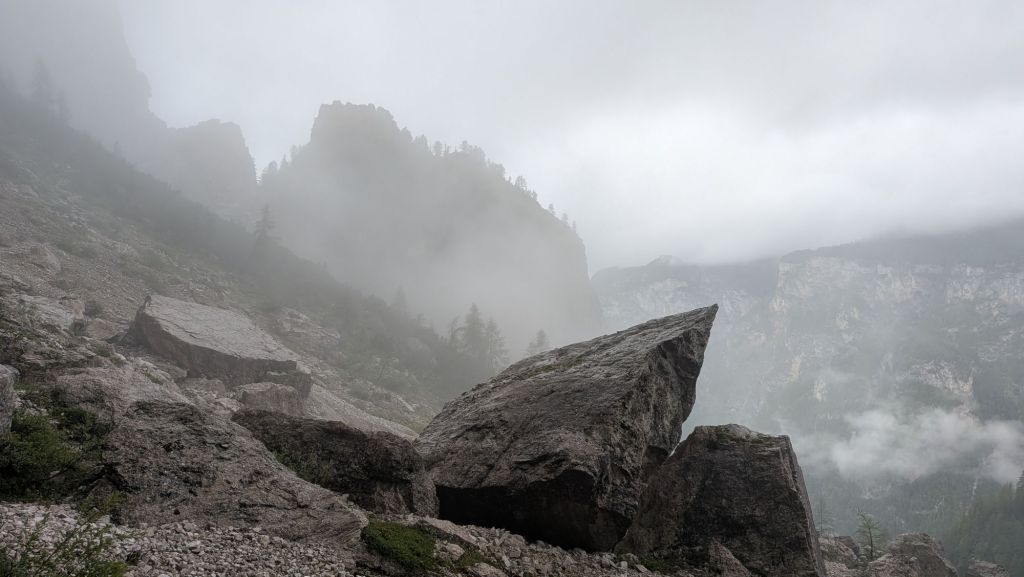
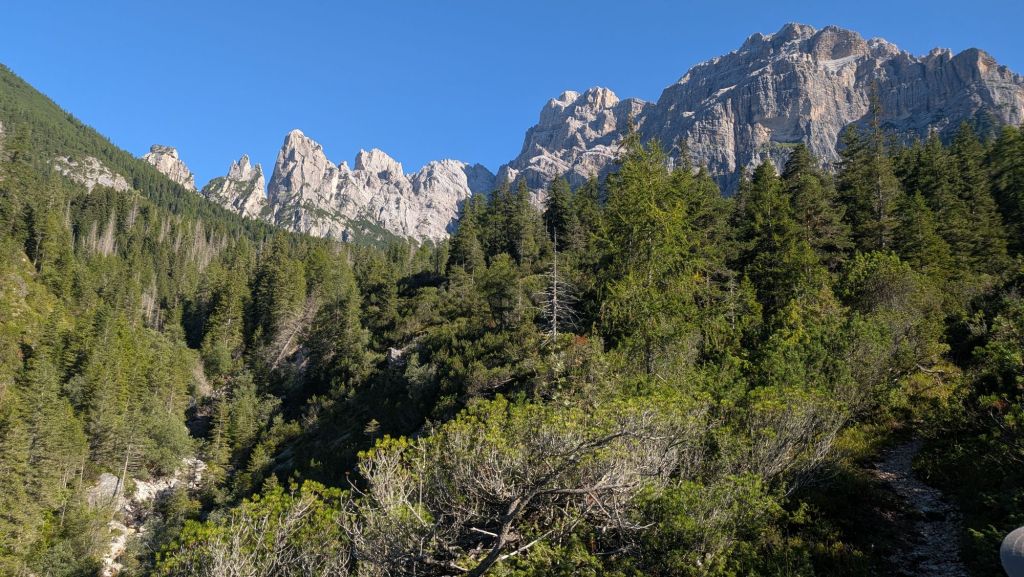
Day six was shorter, just over 9km, but the terrain was challenging, and the day was damp. We had to cross several rock falls, where sometimes the trail eluded us. The views, at times, were otherworldly.

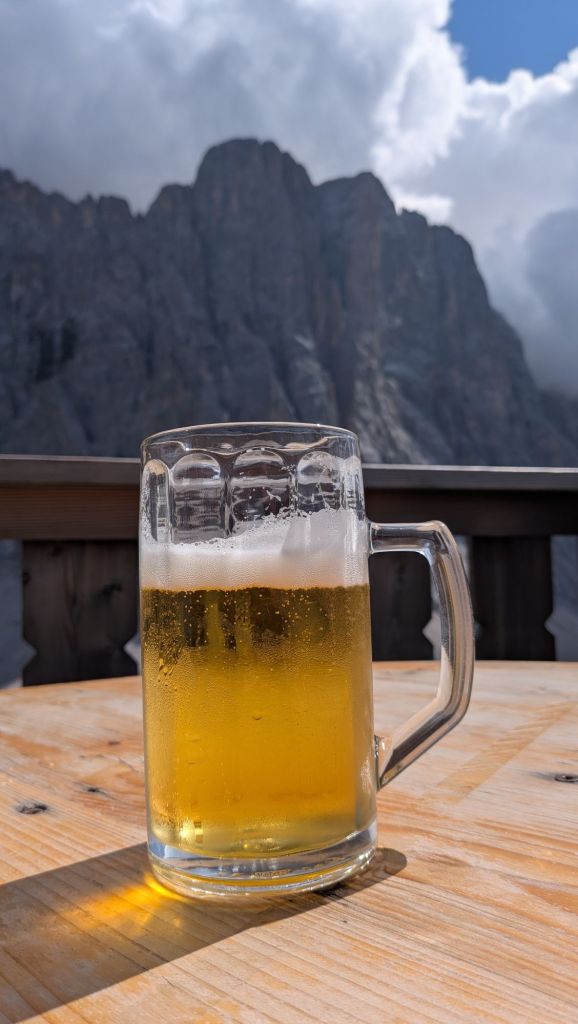
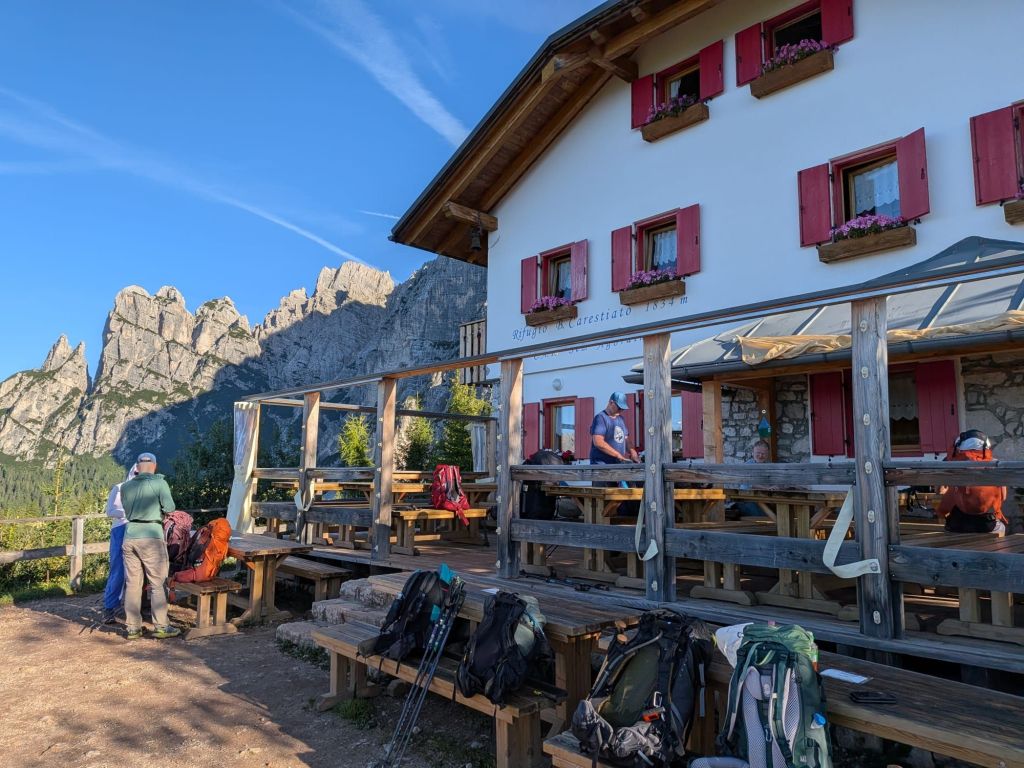
We arrived at Rifugio Carestiato earlier than normal, so we had a hearty lunch, a shower, a nap, an even heartier second lunch, a couple of beers, and dinner. It was at dinner where we met Michael, a 59 year old nurse who walked out of his house in southern Germany on July 18th and was continuing on foot to somewhere in central Italy. He’s still walking, he won’t be finished until September 7th.

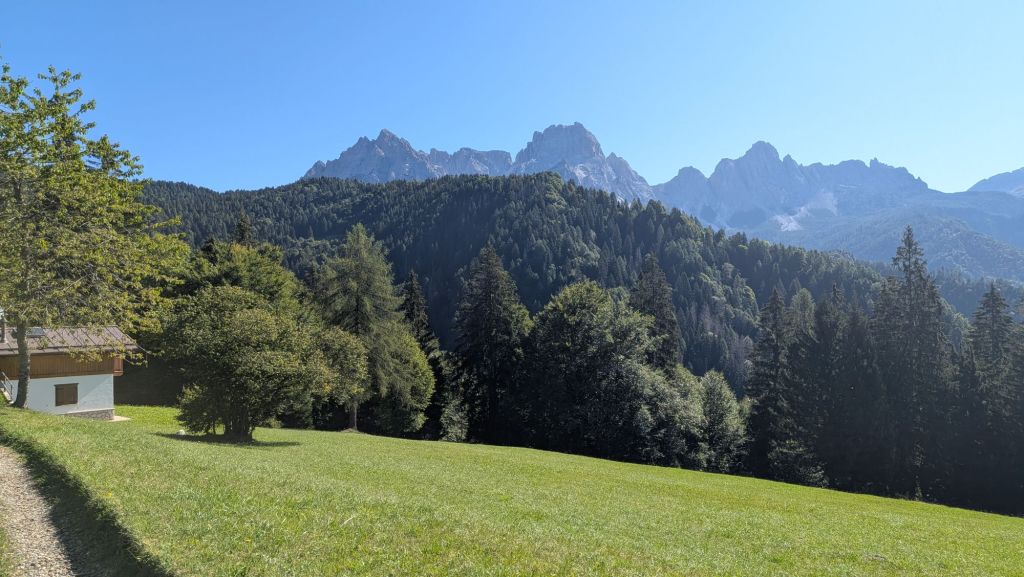
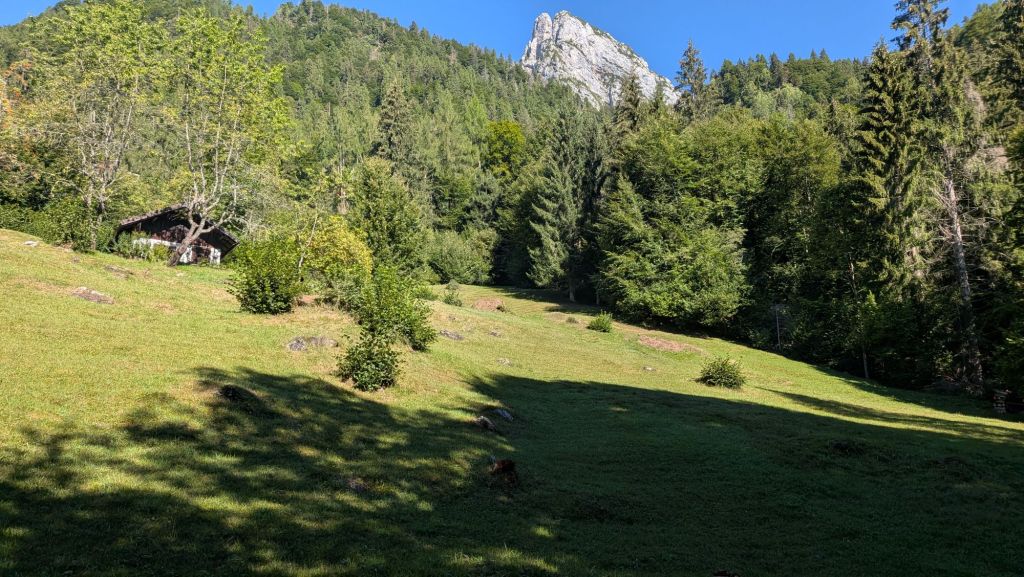
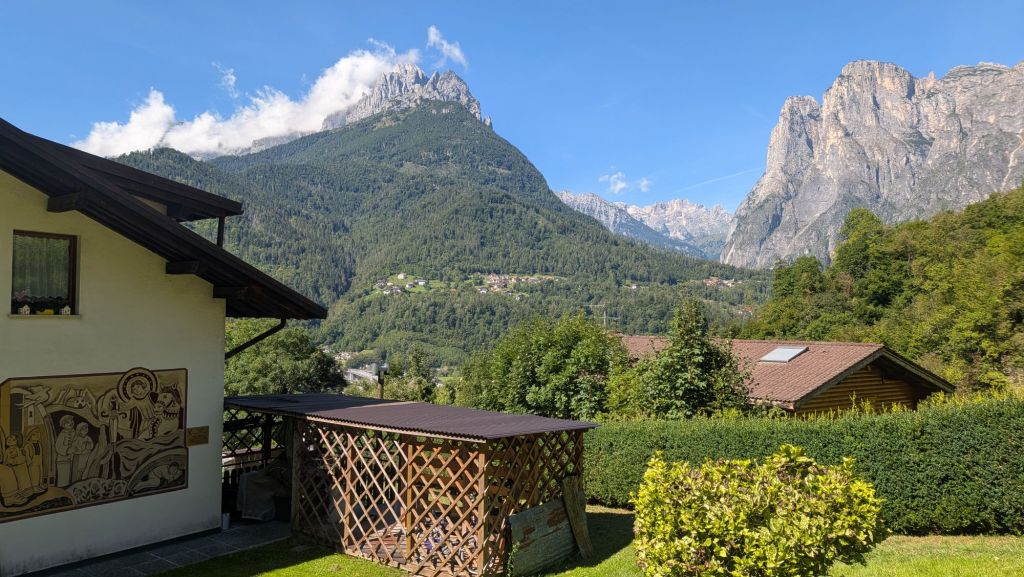
Day seven was beautiful, but all downhill, all 10km of it. The path took us from our alpine Refugio to pine needle forests and cute little cabins in green pastures. The rocks and roots were often slippery, requiring careful calculation with every step. It was both hard on the knees and the brain.

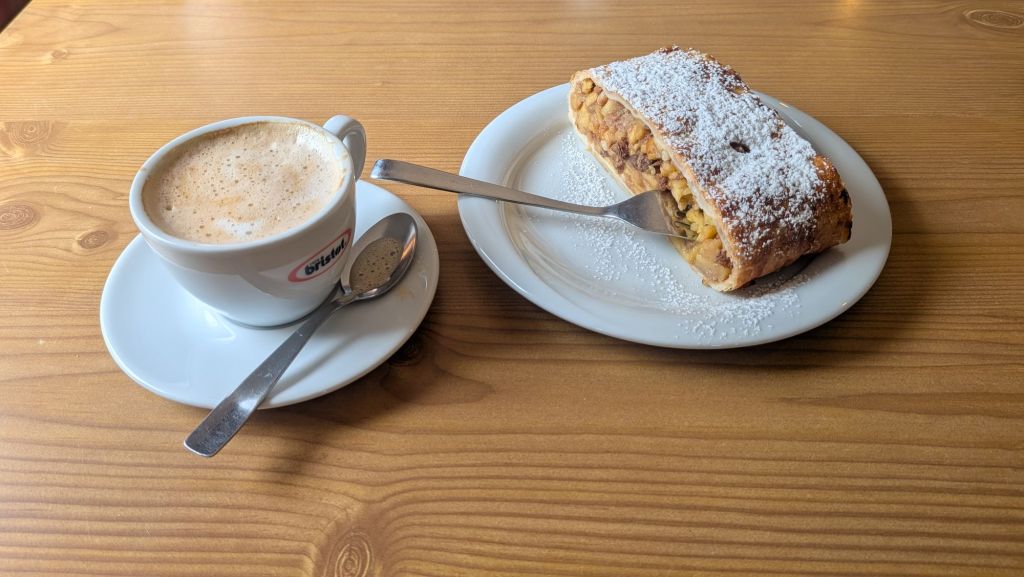
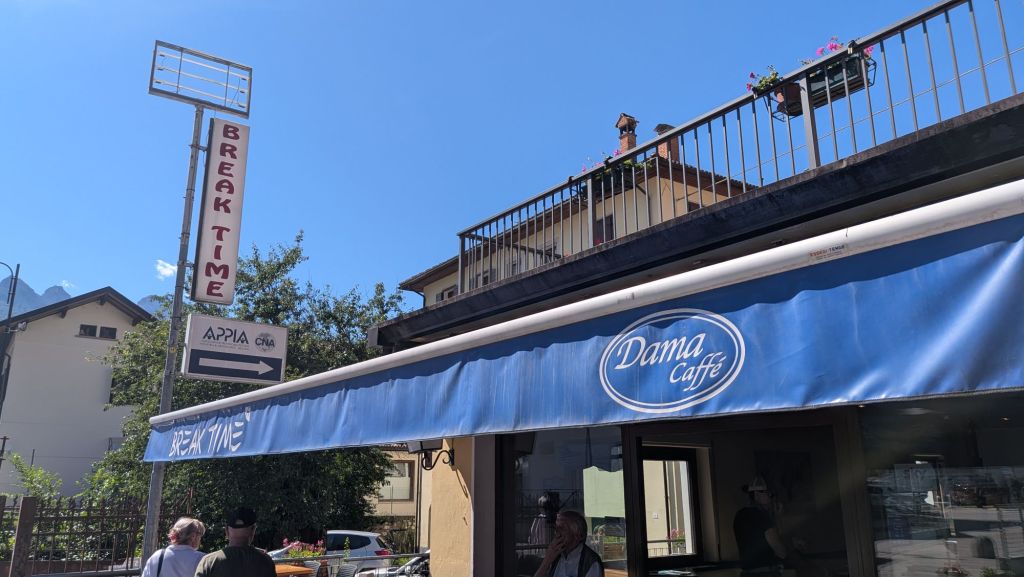
We descended into Agordo, knees ablaze, and stopped at the first place we came across

Aptly named Break Time.

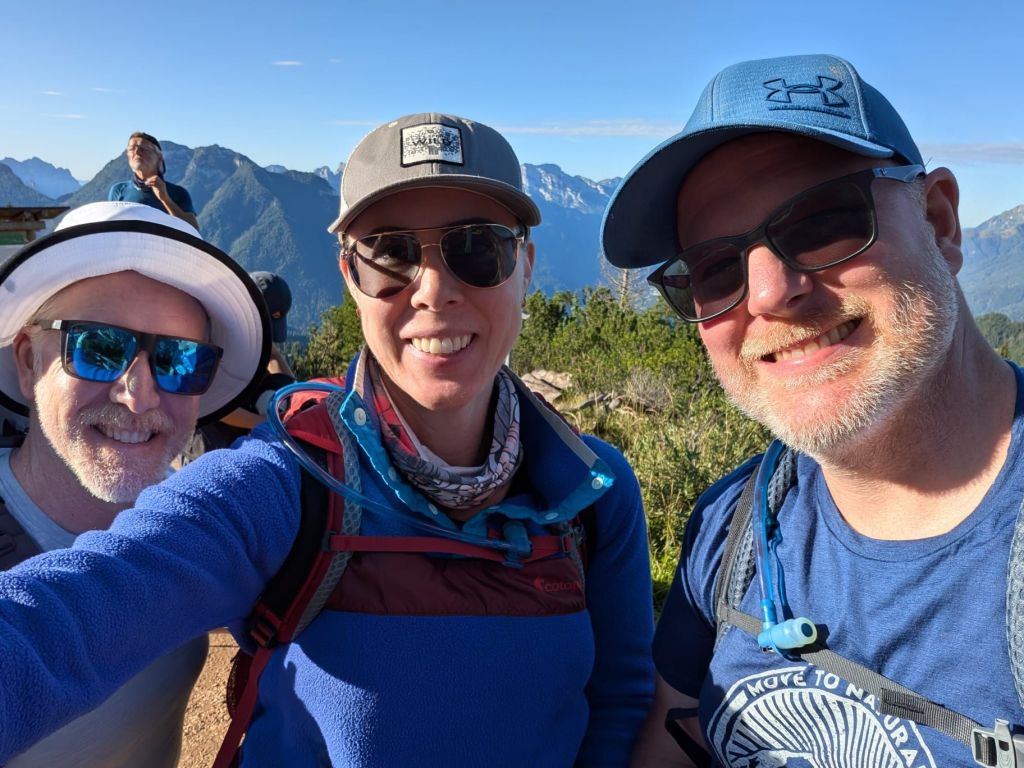
The hike was challenging, moreso than we anticipated. We all wound up with a few bruises and scrapes, but our memories of the trail will stay with us long after they have faded. Would I do something like this again? Possibly, but not for a while, I was sick of climbing mountains halfway through day six. Our alpine adventure was complete.

The Dolomites. Day 3

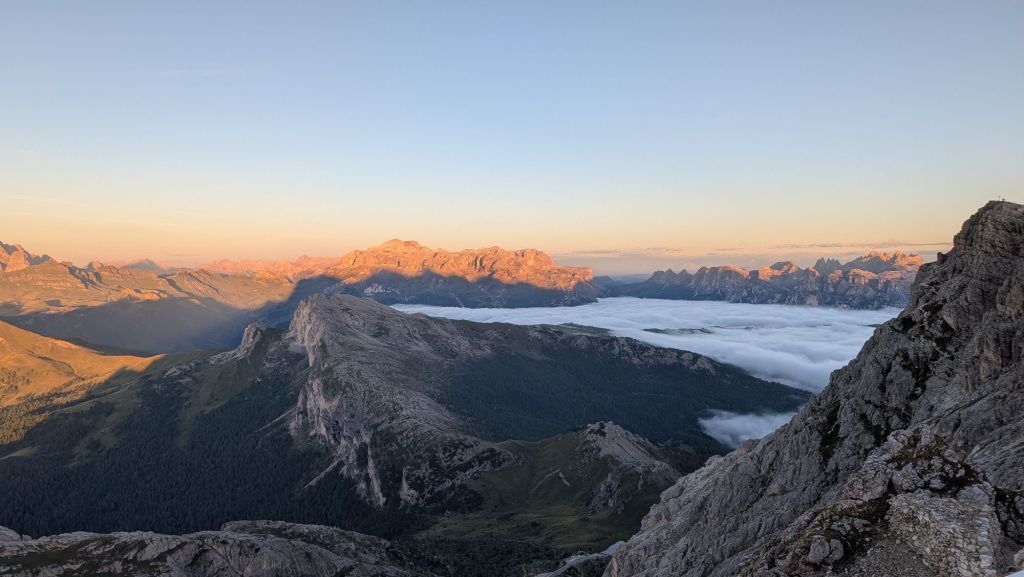
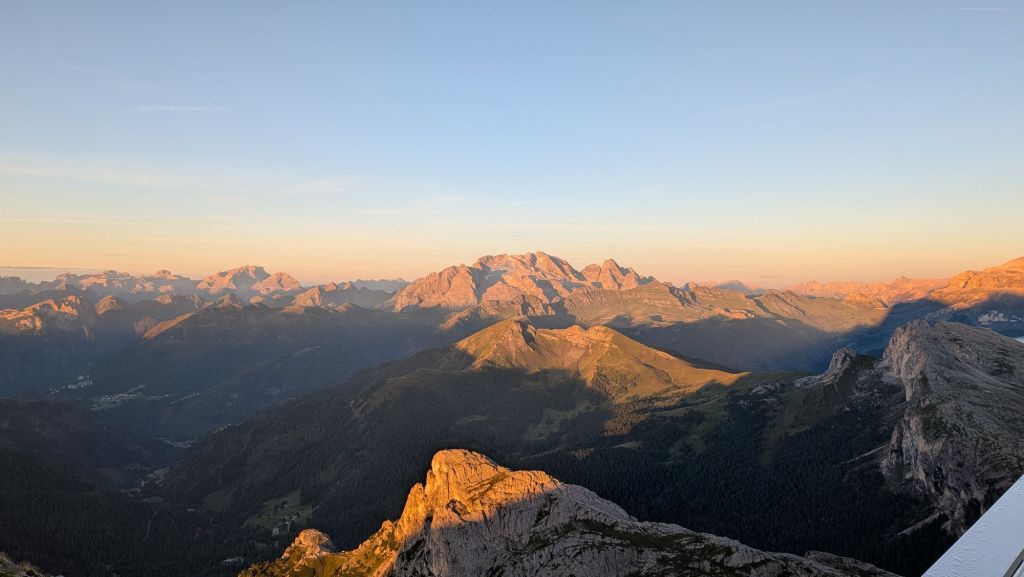
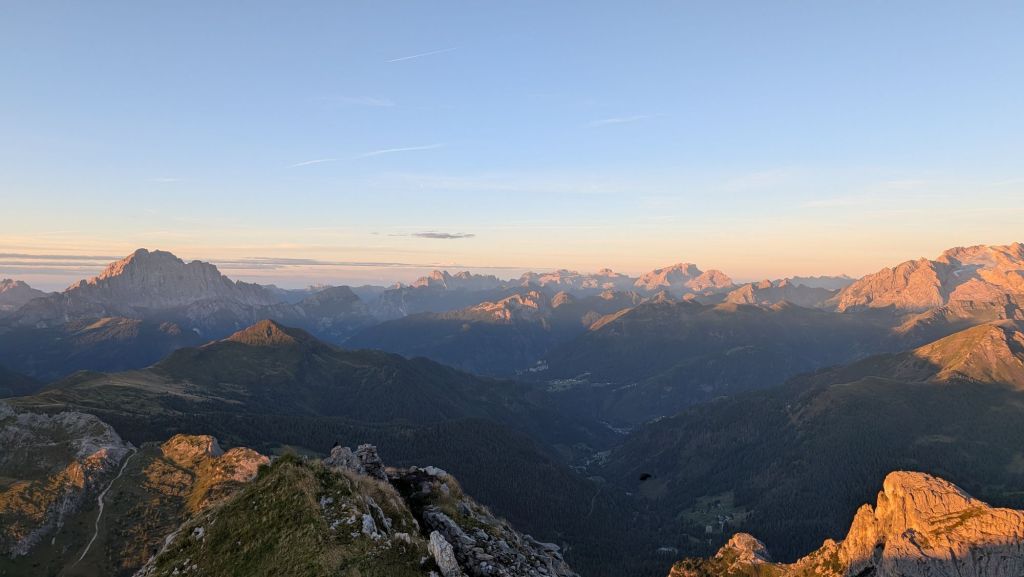
After the events of the day before, and for some reason, a crappy sleep, the morning decided to grace us with this 👇

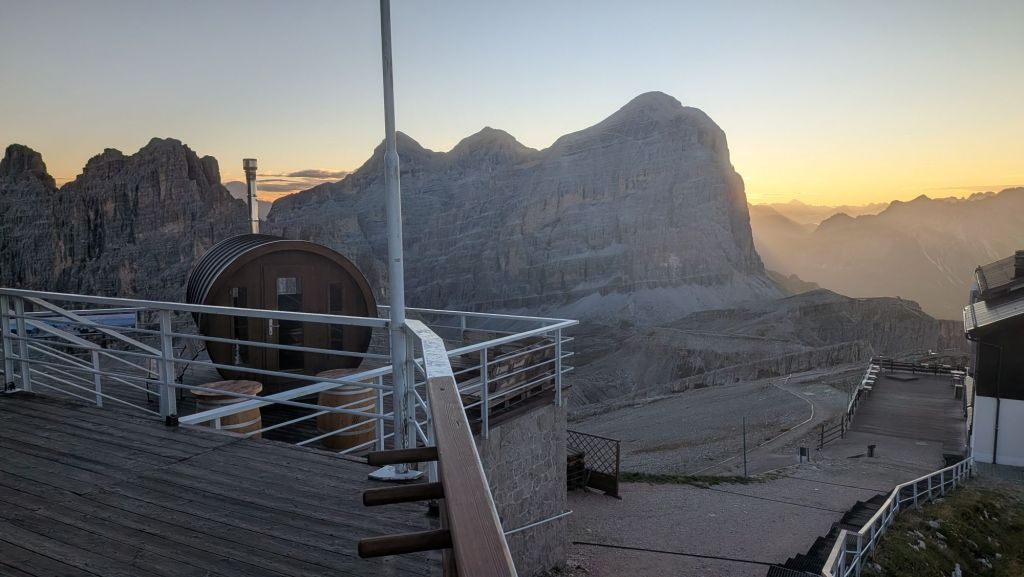
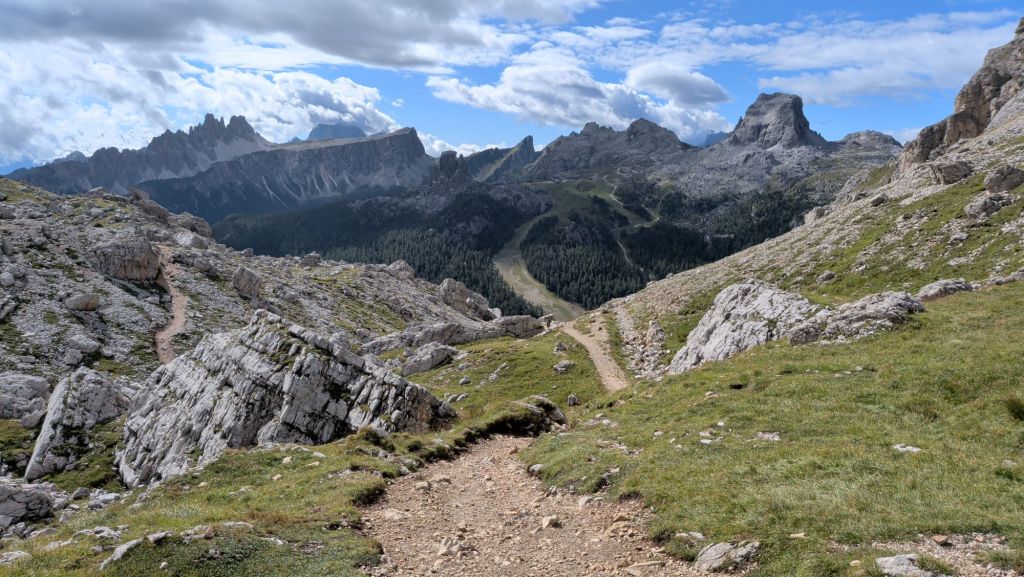
The panoramic views from Lagazuoi did not disappoint, a golden reminder of why we do this. Day 3 was going to be shorter, 8km mostly downhill with an incline to Rifugio Scoiattoli. We started out at roughly 9am.

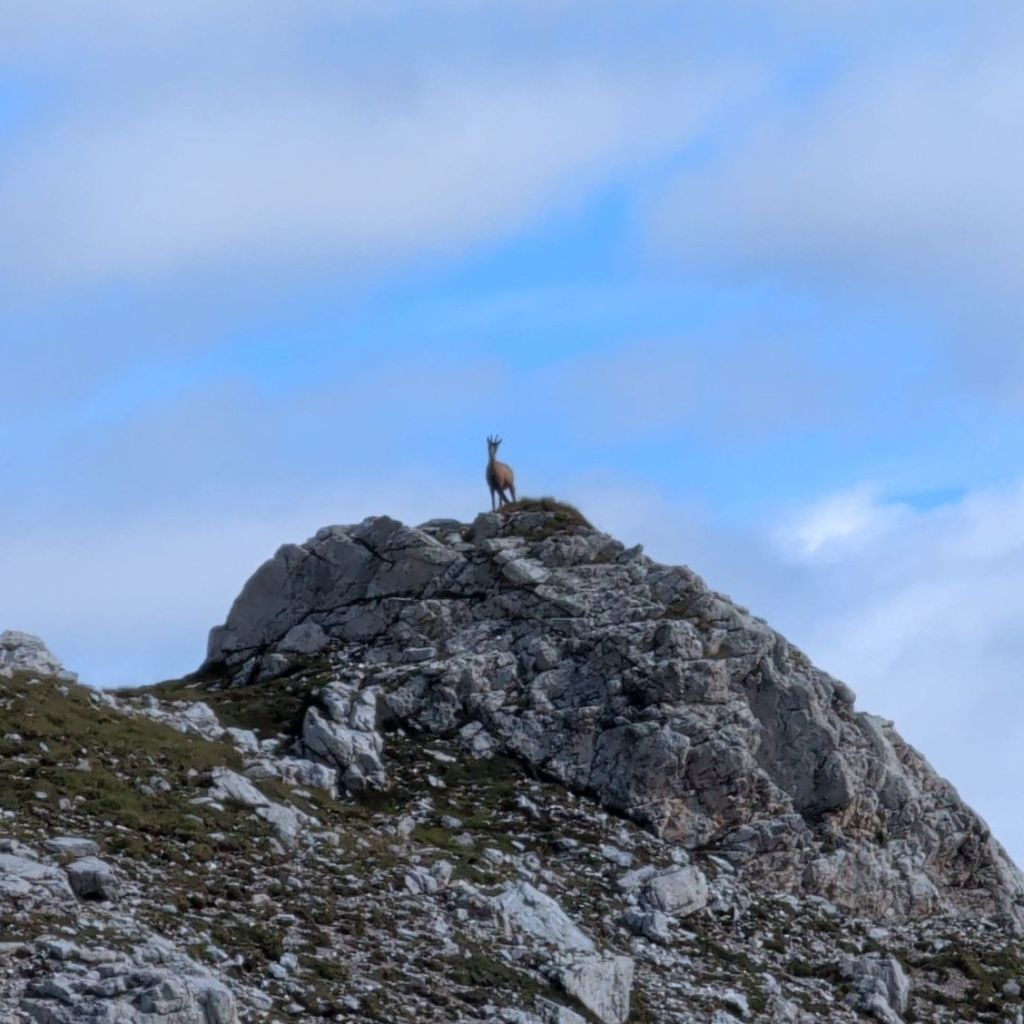
Along the way we saw this majestic ibex.

We made our way to the valley below and eventually came across a restaurant that sat at the base of a chairlift that led directly to our next Refugio. It wasn’t a difficult decision. It took roughly 10 minutes to reach the top. I guess you could call it a rest day.

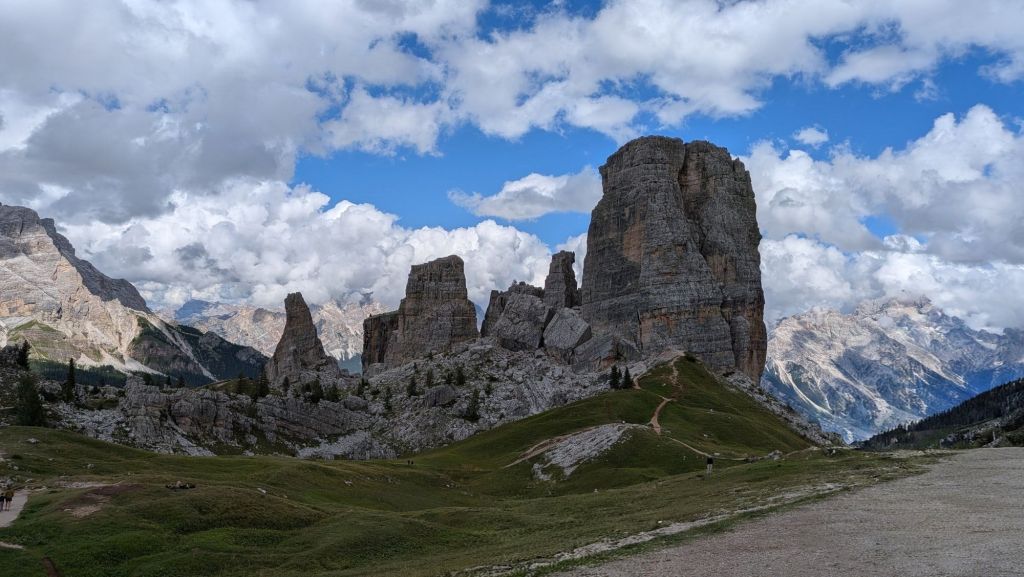
Cinque Torri. Five Towers.

Our reward. Day 3 in the books.

The Dolomites. Day 2

Where day one was mean, day two was sadistic. It started off fine; we knew the weather wasn’t going to be great, we knew our boots wouldn’t be dry, we knew it would be a challenging day with over 17km and more than 1500m of elevation gain. These were the things we knew. What we didn’t know is how this day would test us.

We began the day as dry as we could. On the trail, it’s advisable to pack as light as possible, so much of what we wore was still damp from the previous day, but at least when we started it wasn’t raining. By the time the rain really kicked in we were just a few minutes away from Rifugio Fannes. It was around 11:00 am, the kitchen was not yet open, but we could still get a cappuccino and wait the half hour until it was. We had a great lunch, put our packs back on and headed out.

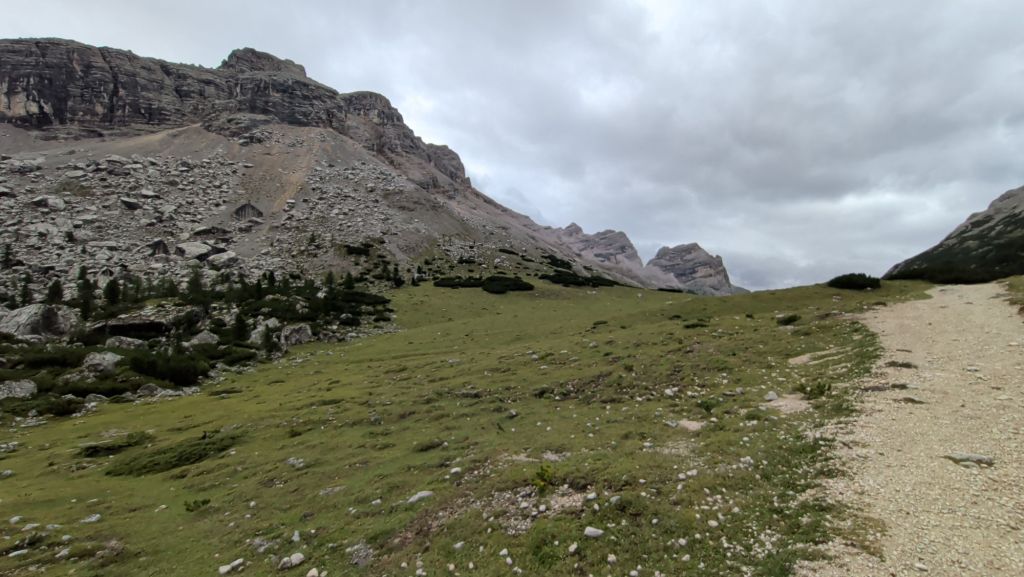
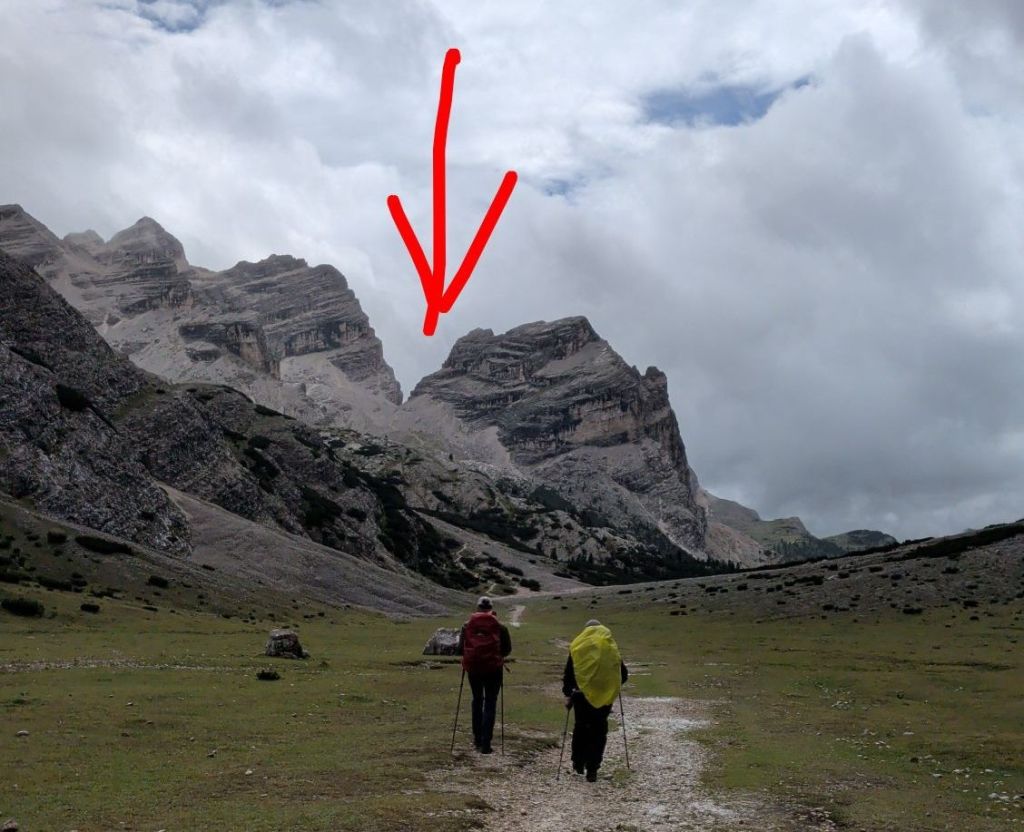
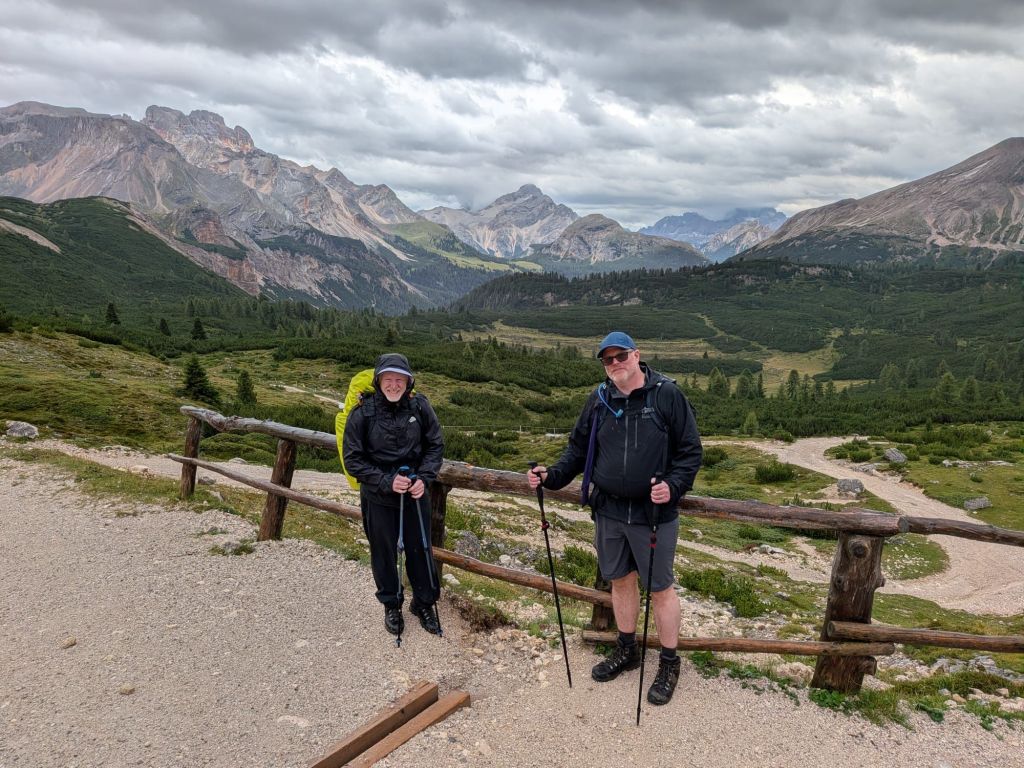
Pay attention to that gap right there, because that gap is this peak right here.

A bit of an incline, and as we approached that point the rain and wind began to pick up. But we were geared up, and nothing could be worse than yesterday.

Carmen made easy work of this stretch, and waited for Rafer and myself to meet her. As we climbed, the wind got even stronger and the trail steeper. I was beginning to feel the previous 14km along with the almost 1000m of incline. The fatigue in my legs making the peak feel like it was getting further away. I took several breaks, all the while, Carmen waited. Once I was within earshot, Carmen called down to me saying she was going to go ahead – it was too cold and windy to wait. I waved her on.

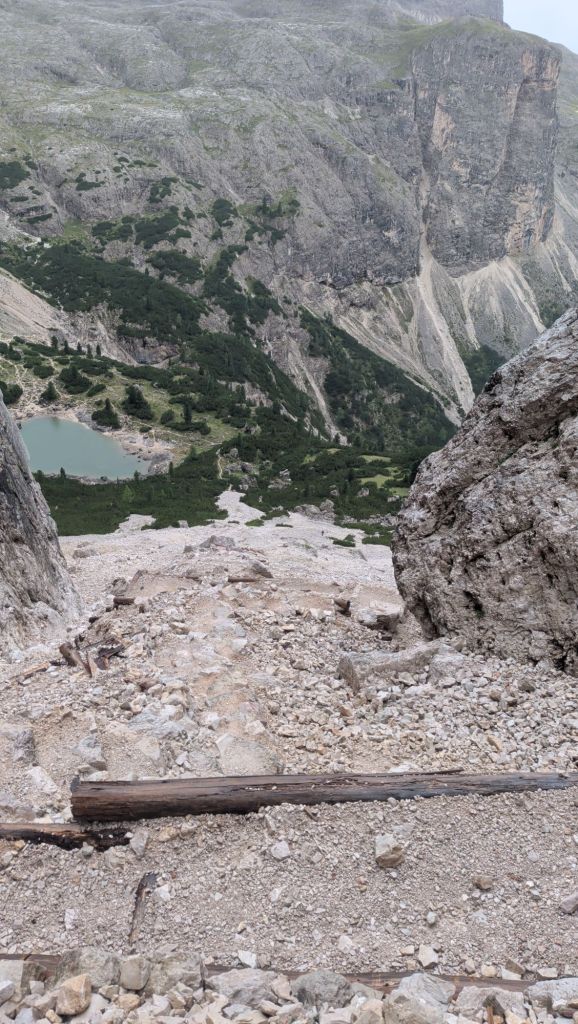
Once I made it to the top, I finally saw what was next. The steep descent to Lago Lagazuoi.

Every YouTube video I watched showed this point along the trail, every single one of those videos showed numerous hikers navigating the infinite switchbacks under sunny skies dappled with puffy white clouds. For months I dreamt of reaching this place, hiking down and swimming in that beautiful alpine lake. Instead I was met with sheeting rain and wind blowing up the slope  so strong, it pushed me back from the edge. When I looked over, I saw Carmen’s backpack disappear around a corner. And I wouldn’t see her again until she reached the bottom.

I didn’t take any more pictures, visibility became worse, photos were pointless. We slowly worked our way down, again Carmen waited. When I turned off the last knee crushing switchback and returned to level ground, I found Carmen sitting under a tree trying to get a little bit of shelter from the wind and rain. While she waited, she called ahead to the next Rifugio to let them know where we were and that we were still coming. If she didn’t do that, we ran the risk of losing our reservation. The guy on the other end told her that we were at least 2 hours away. He was wrong.

At around the same time I reached Carmen, we heard our first crack of thunder. I told her not to wait, to get to the Rifugio as quickly as she could. She didn’t hesitate. I waited a couple of minutes for Rafer to catch up, and we moved on.

I’m recounting these events a few days removed from them, and at right about this point my memory is a bit spotty. I was exhausted, hungry, wet and cold and still had 2km and 400m of ascent. I could see the Rifugio from where I was, it didn’t seem so far away, but the path there wasn’t the most direct.

The thunder continued, but got further away. The wind, however, did not relent. We slowly climbed the path towards our home for the night. Several times, I lost the trail because I either missed a marker or there was none at all. Visibility was poor, and the fatigue was extreme.

I reached the final climb before Rafer, checking periodically to make sure he was behind me. The trail up wasn’t obvious at first, but I finally found the switchbacks that ran along the Lagazuoi tunnels, relics left behind by Italian soldiers from WWI. Their black openings yawning into the wind and the grey, promising shelter but nothing else. I plodded on, drained.

Eventually I had the Rifugio in sight. The path turned from gravel to steel to wood. I was done. I entered the Rifugio cold, wet, and starving. With no idea how far behind Rafer was. Carmen greeted me with a shower token and showed me our dorm. The shower token gave me 25 liters of hot water. Three minutes I’ll never forget.

Eventually Rafer showed up, we ate dinner, had some beer and went to bed. Day 2 was finally done.

The Dolomites. Day 1

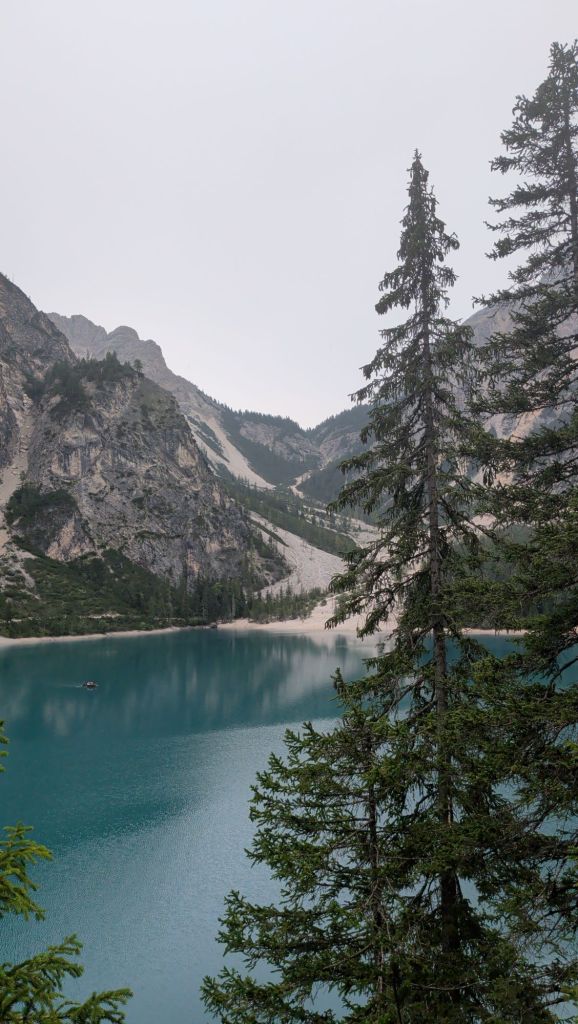
This is where we begin: Lago Di Braies, beautiful, picturesque, and full of rowboats. We arrived here a little later than we wanted, there was an issue with the bus ticketing system, and a single lane alternating closure on the ride up. Instead of starting our hike at 9:30, we started at 10:00. No big deal, or was it? 

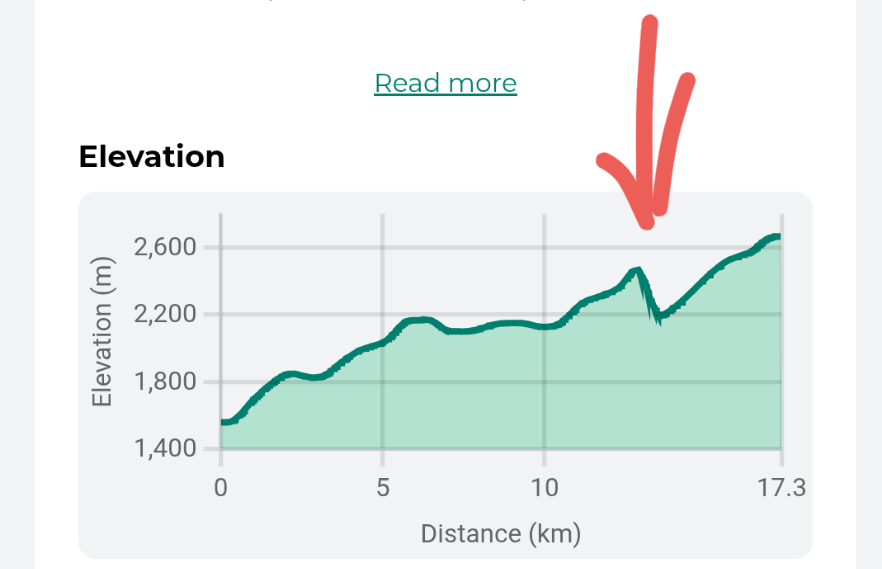
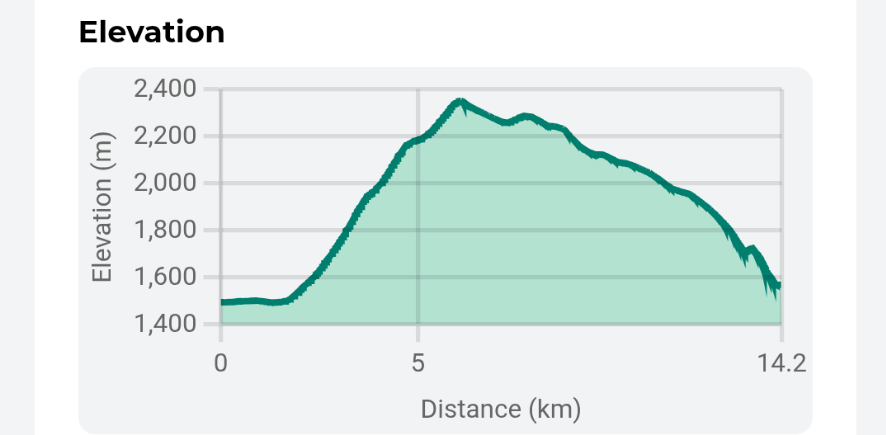
You can see from this elevation profile, we had our work cut out for us: 1200m of elevation over about 5km. The weather was overcast, so not at all hot, something that we were thankful for. As we ascended, the scenery began to change, the trees started to thin, and the clouds darkened. Soon we were putting on our rain covers and rain jackets as the first few drops quickly turned to a steady rain. Then came the thunder, at first from a distance, but close enough to quicken our steps. Rifugio Biella was near; we just didn’t know how near. Every crest became a disappointment because the rain was getting harder, the wind stiffer, and the thunder louder and no Biella in sight. We climbed the stony path with the storm on top of us. At one point I counted only 4 seconds between lightning and thunder. Then finally after reaching the top, Rifugio Biella appeared. Wind whipped and soaking wet we made the quick descent to the Rifugio, waterlogged boots squishing the whole way down. We went in and had some lunch and waited out the storm. We weren’t even half way to our destination.

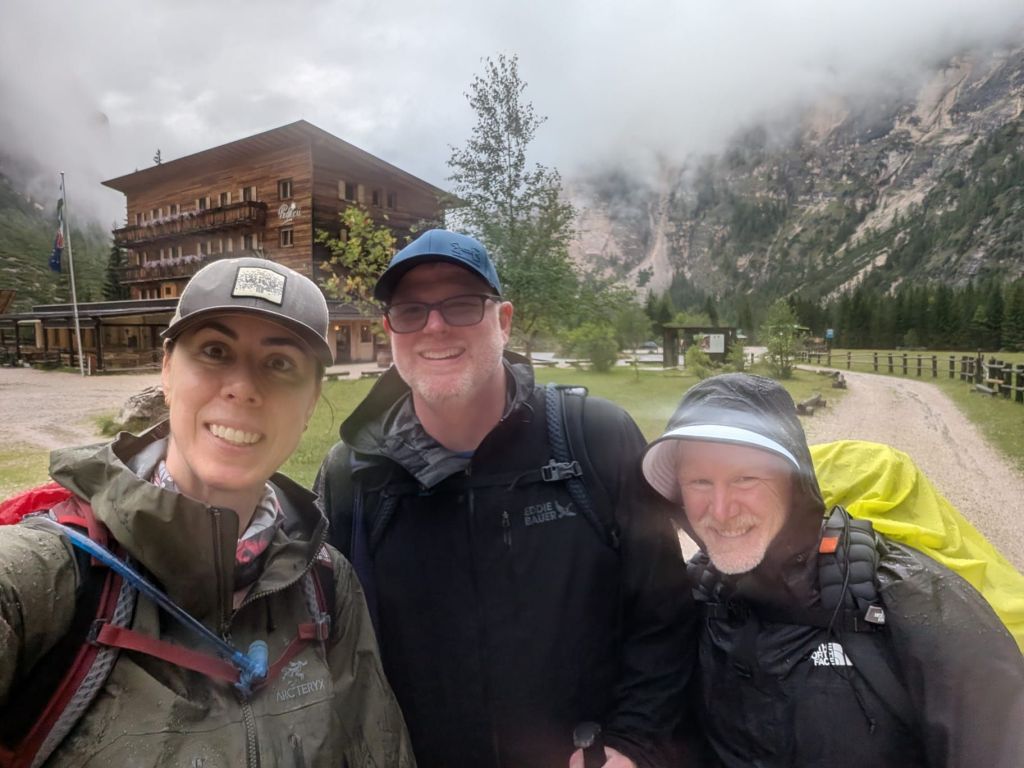
We continued on our path for the remaining 8 ish kilometers through rain that came and went. The rest of the day was pretty much uneventful, that is until we made our final descent to Rifugio Pederü. A series of unrelenting switchbacks that were made slippery from the constant rain zigzagged steeply into the valley where, on about the third to last corner, I slipped. Luckily unhurt, just a bruised elbow and a sore knee, a misshap that could have been much worse. After being helped up, and scraping the mud off my sleeve we made the last steps to our home for the night at about 5:30.

We were greeted with a hot shower, a fantastic meal and of course, mountain beer. Exhausted, we went to bed, blissfully unaware of what lay ahead. Day one was done.

Venice

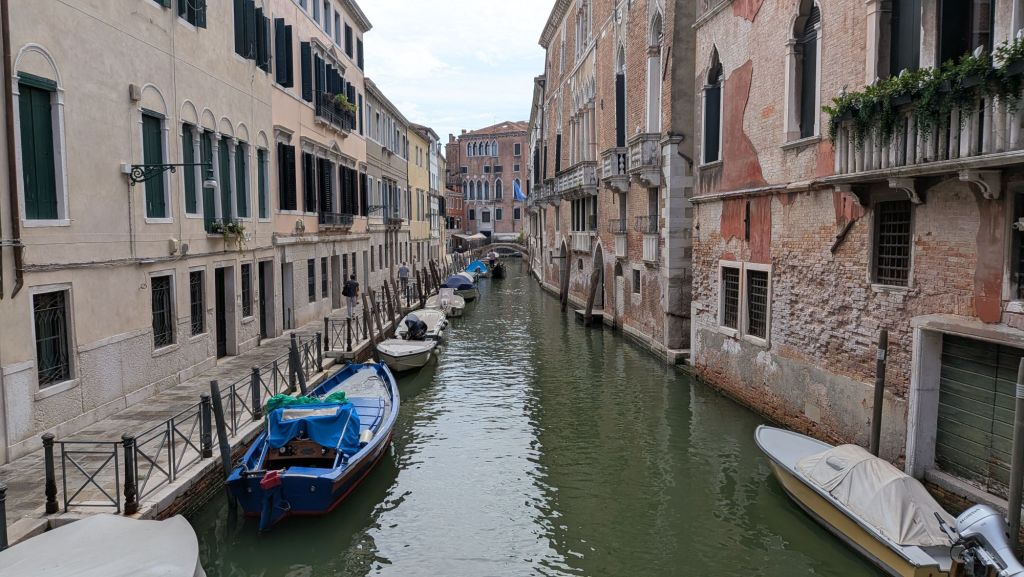
We landed at roughly 9:15, right on schedule. Passport control and customs were a breeze. Getting tickets for the water taxi was fairly straightforward, and though we had to wait about 30 minutes for the boat to leave, an uneventful 40 minutes later we arrived in Venice. All we had to do was navigate the narrow passages while hauling all our luggage for about 800m. It sounds easy, but I had just accidentally punched the ceiling of the water taxi while donning my backpack, which resulted in a tiny scrape that decided to bleed dramatically. By the time we reached our hotel with about 70lbs of luggage, the humidity had us dripping with sweat, and my hand with blood. But we were here, day one.

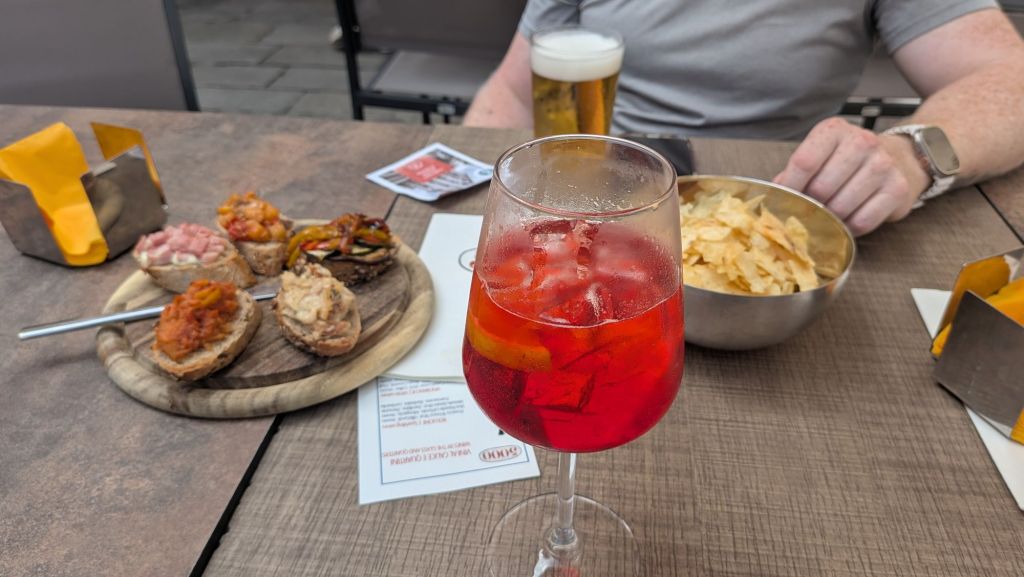
Cicchetti and a spritz.

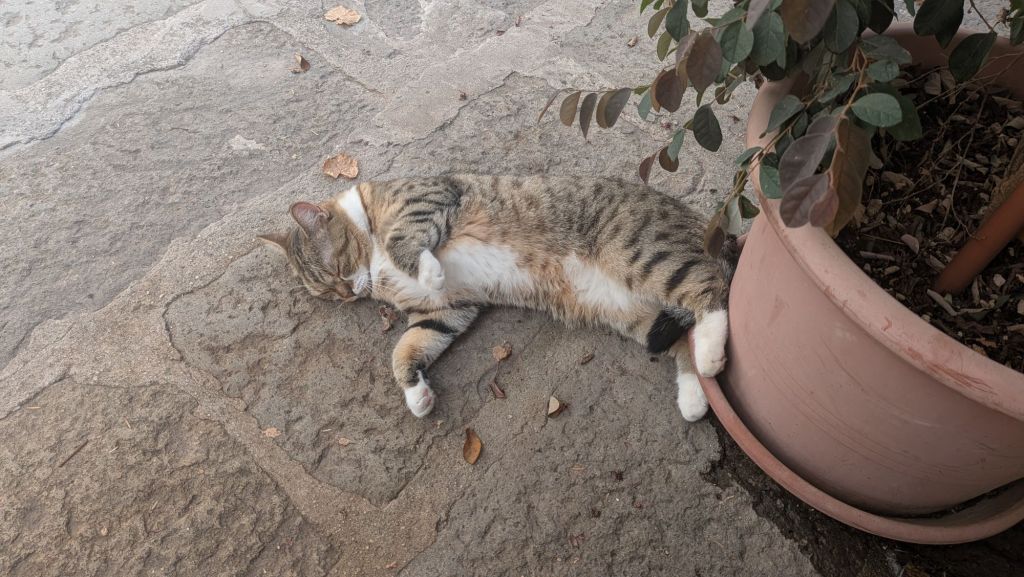
This little guy.

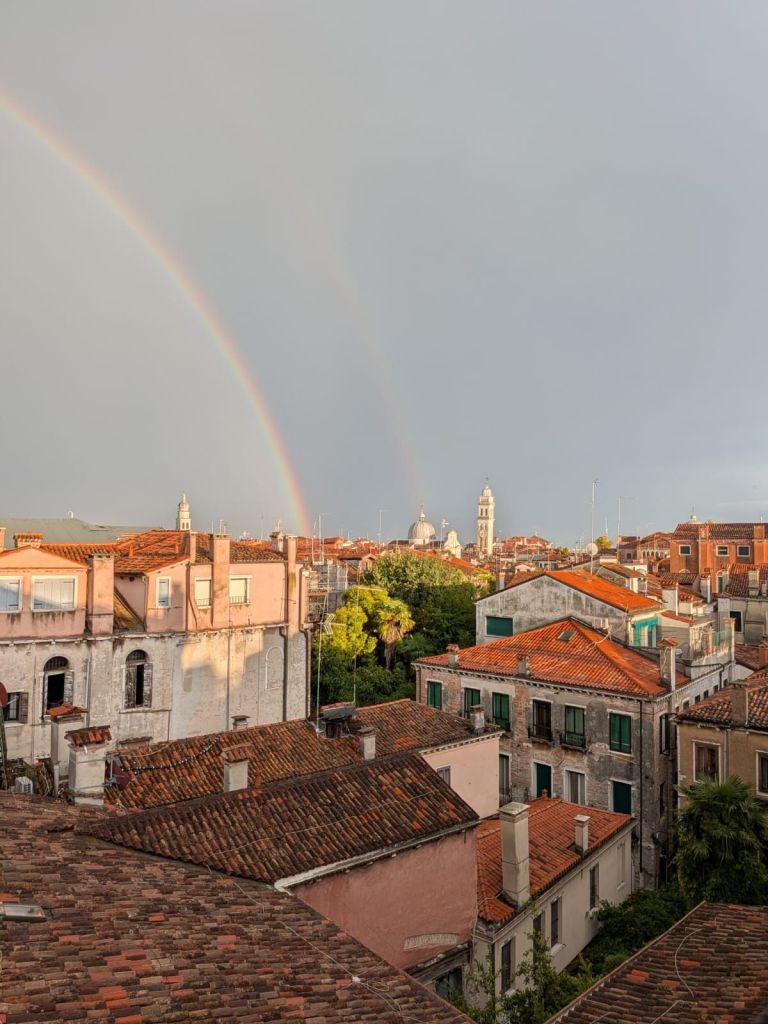
This Rainbow came after a wicked thunderstorm.

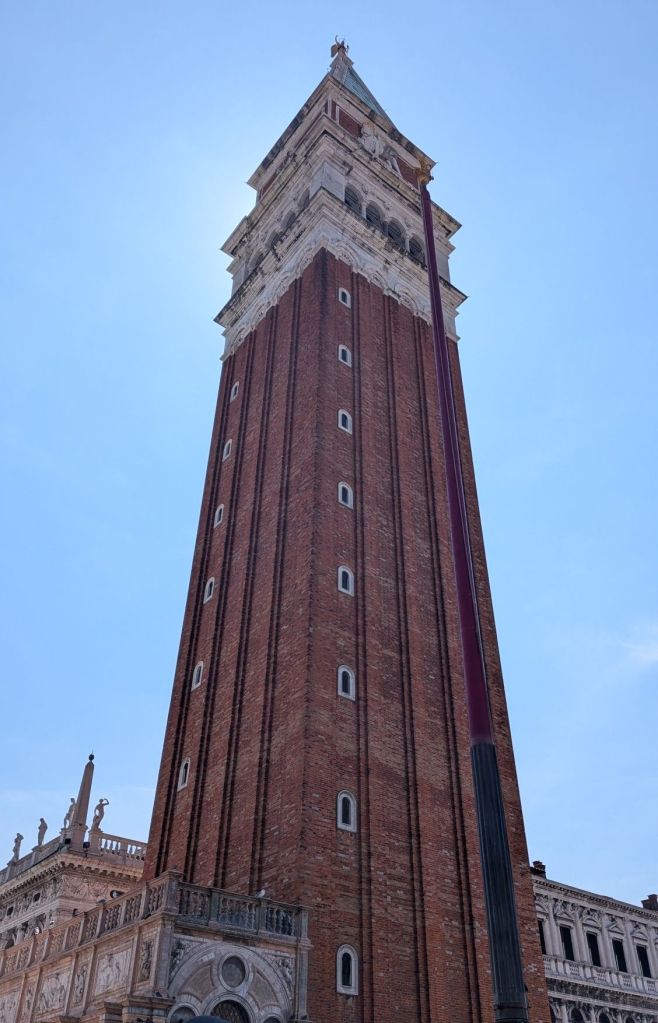
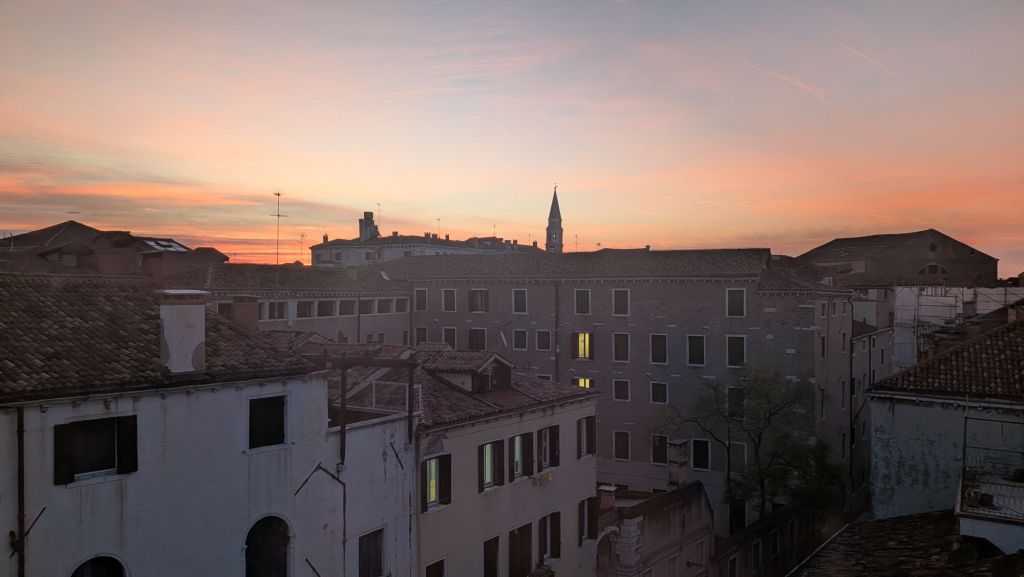
Day 2 I was up before sunrise and caught this backlit skyline.

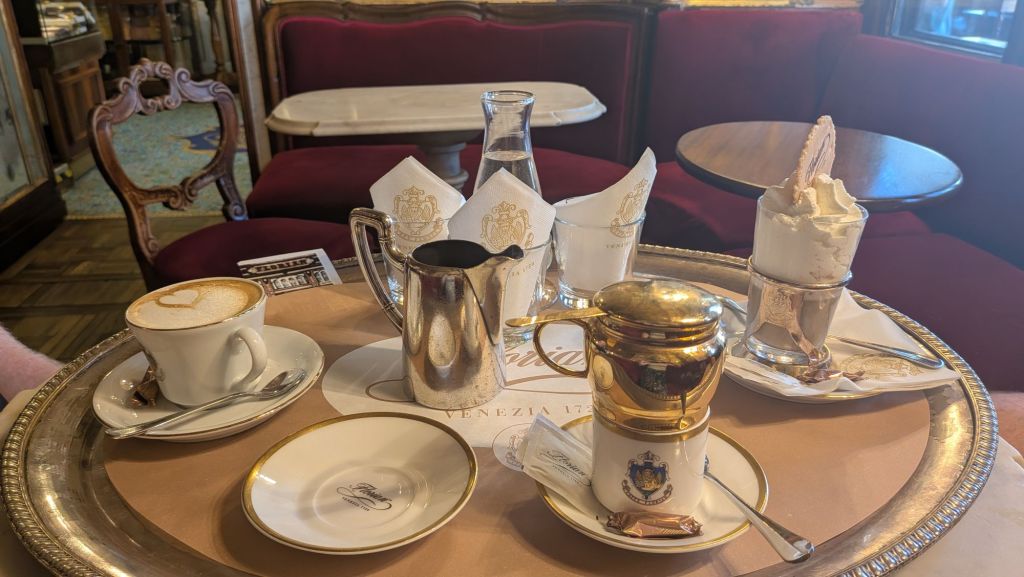
Had a fancy coffee, wandered the city, got a haircut, and had a nap.

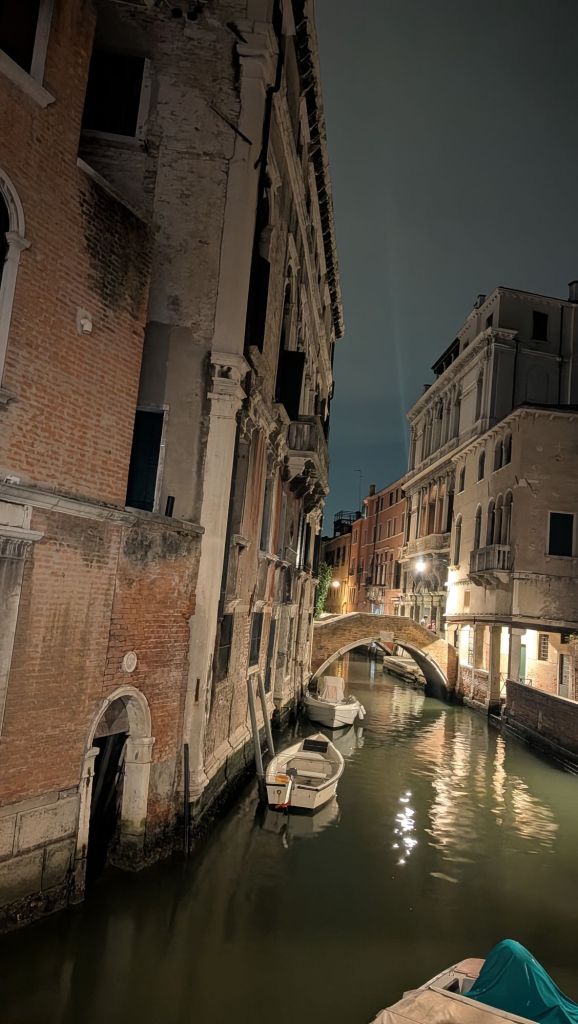
We had an amazing dinner, and wandered some more, had a few drinks along the way. Venice, to my surprise, was amazing, and I’m honestly happy that we’re coming back, but for now it’s bedtime, tomorrow we have to catch a bus.

Departure Day!

After what was a very busy Saturday, we’ve packed up, said our goodbyes, locked the doors and are finally on our way. One year, well actually 359 days of travel. A marathon that will undoubtedly test our endurance, patience, and resolve.

First stop, Venice. Where our booking has us in an old hotel that overlooks a canal, and features a shared bathroom. Can’t wait.

Did anyone else watch the clock tick down to zero? Yeah, me neither. I’ll post more when we arrive, until then, I just want to thank everyone who helped us get here, and continue to help us as we speak. Without you, we couldn’t do this.

Ciao!